
Belize Winter Travel Guide
Belize in winter trades cold-weather routines for tropical warmth, sea crossings, rainforest roads, and days that can combine an island stay with a mainland adventure. December through February is a popular travel window, so the key is not trying to see every corner. Pick a focused route, reserve important stays and transfers early, and leave enough room for the journey between places.
Belize winter travel at a glance
- Expect tropical warmth: Belize’s November-to-March winter rarely falls below 60°F (16°C).
- Choose February when lower rainfall is your main priority; it falls in the clearer February-to-May dry period.
- Book promptly for December through February, a high-demand season for North American visitors.
- Keep a short trip geographically focused, ideally one mainland region plus one island area, or a single region.
- Use domestic flights and boat connections to save time when combining destinations; ground travel and buses are generally slower but more economical.
- Recheck entry and travel-advisory information shortly before departure, especially for winter 2026–27.
Winter is well suited to travelers who want an active tropical break without winter temperatures. The practical limitation is demand. A relaxed plan comes from choosing fewer overnight bases, rather than treating Belize as a place to race through on a tight schedule. That approach also gives weather or transfer changes less power over the trip.
Winter weather: December, January, and February
Belize’s winter is warm, but it is not one uniform weather season. The tourism calendar places June through December in the wet season and February through May in the drier period. That makes February the clearest choice for travelers hoping to reduce the chance of rain. December remains a popular winter month, yet it still sits within the stated wet-season range.
January is a sensible middle-ground choice for many itineraries. Pack for sun, heat, brief rain, and strong air-conditioning rather than for cold weather. A light rain layer, sun protection, a reusable water bottle, and footwear that handles wet paths or boat decks are useful across both mainland and coastal plans.
| Month | Planning advantage | Tradeoff to consider |
|---|---|---|
| December | Winter-season travel period with tropical warmth. | It remains within the wet-season range and is part of high season. |
| January | A strong option for a warm midwinter break. | High-season demand can affect availability and trip costs. |
| February | The best winter choice when lower rainfall is the priority. | It is still within the high-demand December-to-February period. |
Why winter requires early, focused planning
December through February is high season in Belize, fueled by winter travel from North America. Favorable timing brings a straightforward tradeoff: accommodations and tours can face stronger demand, and prices can be higher than in less busy periods. Build your trip around the stays, activities, and transfers that matter most, then leave the rest of the schedule flexible.
Avoid using a single nationwide budget figure as your planning tool. Costs change with travel dates, lodging style, routing, and the transport choices you make. Domestic flights, private transfers, rental cars, and island boat connections add convenience and usually add expense. A mainland itinerary using buses and fewer transfers can be more economical, though it gives you less control over timing.
For a first visit, the useful question is where to stay in Belize for first timers, not how many pins can fit on a map. Choose an overnight base that matches your priorities, then build day trips around it. A mainland-and-island combination can be rewarding, but it works best when the number of changeover days stays low.
Choose an itinerary shape before booking transfers
The simplest winter itineraries follow one of two patterns: stay in one region and explore at an unhurried pace, or pair one mainland base with one island area. The second option creates variety but requires careful attention to flight and water-transfer timing. It is better suited to travelers who are comfortable allocating more of their budget to moving between places.

- For a short trip, choose one region only and reduce transfer days.
- For a longer trip, choose one mainland base and one island area, with ample time at each.
- If the itinerary spans several locations, consider domestic flights to reduce travel time.
- Treat arrival and departure days as travel days, especially when a boat connection is part of the plan.
- Reserve tours and transfers in the same sequence as your overnight stays, then check all confirmation details before departure.
Island-focused travelers can use an Ambergris Caye travel guide to compare the practical appeal of that destination with their own pace and transport plan. If the sea is the centerpiece of your trip, the best beaches in Belize are another useful planning subject, especially when deciding how much time to set aside on the coast instead of adding inland transfers.
Still comparing Airport Transfers?
Ask for tour ideas, hotel suggestions, or a simple trip plan that combines both.
Trip Helper
Getting around Belize in winter
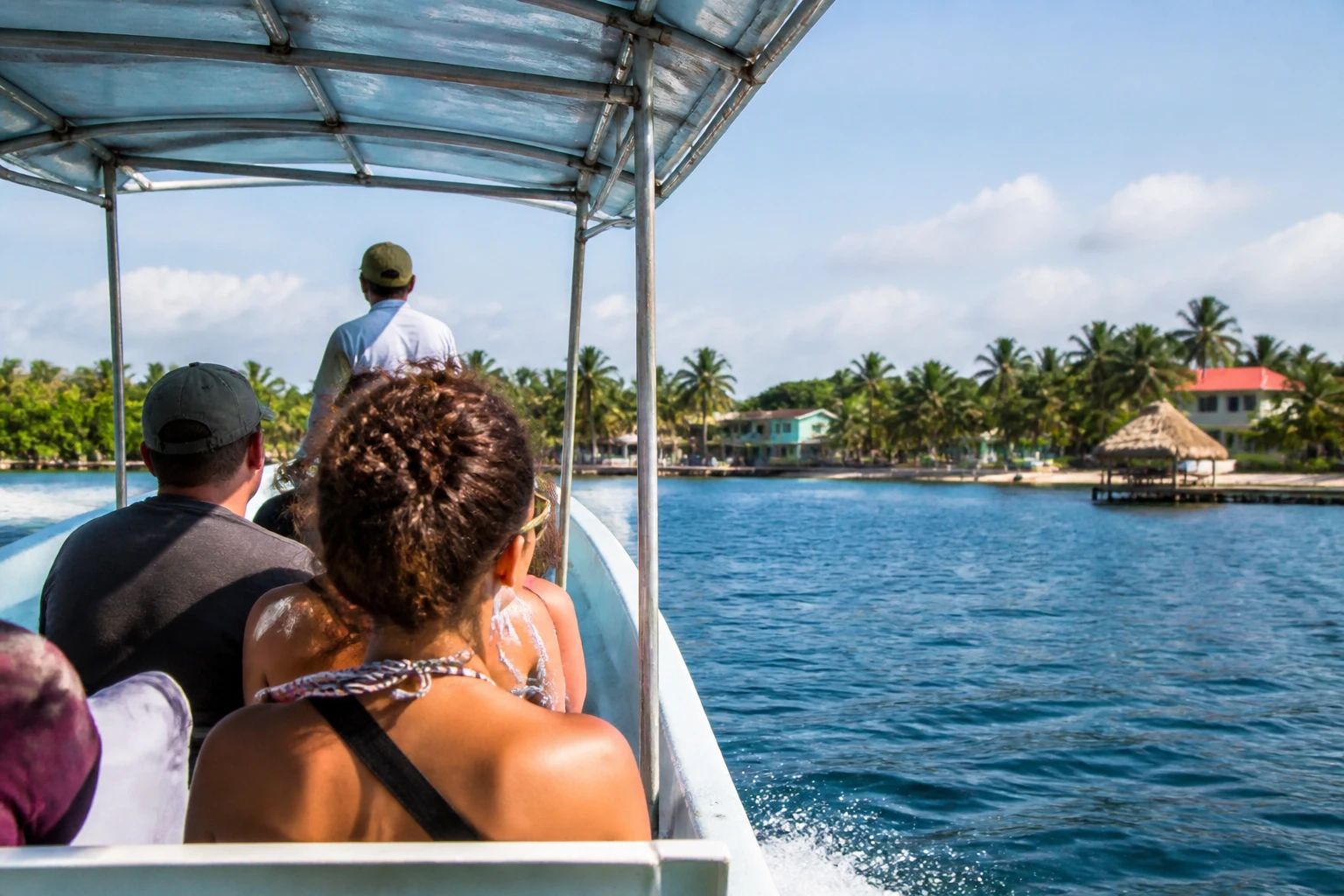
Belize offers domestic flights, helicopters, rental cars, tour operators, buses, and water travel. Local flights are the fastest and most popular option for itineraries that combine multiple locations. They are especially useful when an island and mainland stay are both non-negotiable. Ground and bus travel can make more financial sense when your route is straightforward and time is less precious.
Driving calls for patience and daytime planning. Roads range from paved two-lane routes to dirt or gravel tracks, and some are narrow, unmarked, or include single-lane bridges. Roadside assistance is limited. Avoid driving between cities at night, and do not build an itinerary that depends on a long after-dark transfer after an international arrival.
Taxis are common in cities but less available in rural areas, while Uber and Lyft are not available. Public buses are common, though they may not have features such as seatbelts and airbags. For a transfer that affects a flight, a boat departure, or an evening arrival, arrange the timing conservatively rather than relying on a tightly stacked connection.
Travelers connecting onward to an island will benefit from a Belize Airport to San Pedro transportation guide, because an airport-to-island day involves both air or ground decisions and a water or domestic-flight connection. Confirm your meeting point, baggage rules, and departure time in the booking details before you travel.
Arrival, entry, and travel preparation
For U.S. travelers visiting for 30 days or less, a tourist visa is not required. Bring a passport book valid for the length of stay, an onward or return ticket, and evidence of sufficient funds. Belize also offers a free online immigration and customs declaration system. Entry rules can change, so check the current requirements again shortly before departure.
Passport and visa rules are nationality-specific. Travelers who are not U.S. citizens should use the entry guidance that applies to their own passport rather than assuming another country’s rules apply. Keep arrival documents, lodging information, onward travel details, and any transport confirmations accessible during the journey.
Accessibility needs deserve early, specific planning. Belize travel can involve small aircraft, boats, gravel roads, and limited rural transportation. Before booking, ask each hotel, airline, boat operator, transfer provider, and attraction about the arrangements relevant to your mobility, sensory, or medical needs. Confirm the details in writing so the full route works together.
Build a safer, smoother winter trip
Belize is currently listed by the U.S. State Department at Level 2, meaning travelers should exercise increased caution because of crime. The advisory says to reconsider travel to Southside Belize City and notes that isolated violent crime can occur during the day and in tourist areas. Recheck current advice before winter 2026–27, and make arrival, lodging, and local transport decisions with care.
A few simple habits reduce friction: keep valuables secure, plan city transfers in advance, avoid night driving between cities, and leave a buffer around important connections. The dry season also overlaps with drought risk from February through May. Carry water on long travel days and do not assume rural transport or roadside services will be as immediate as those in a large city.
For activities, start with the kind of Belize tours that fit your chosen base instead of booking outings scattered across the country. Travelers drawn to the coast can also explore a Great Blue Hole Belize guide as they decide whether a dedicated offshore excursion belongs in their schedule. Match each activity to the night before and after it, rather than adding transfers simply to fill a day.
The best Belize winter trip is the one with fewer moving parts
Belize rewards winter travelers who plan with purpose: February for the strongest chance of drier conditions, December and January for a warm high-season escape, and a route that does not require constant packing. A single region suits a short break. A mainland-and-island pairing works well when you allow enough time and budget for the connections.
Book the important pieces early, travel between cities in daylight, and allow the destination’s transport rhythm to shape the plan. With a sensible route and realistic transfer days, a Belize winter holiday can feel expansive without becoming complicated.
Frequently asked questions
Is winter a good time to visit Belize?
Yes. Belize’s November-to-March winter stays tropical, with temperatures rarely falling below 60°F (16°C). December through February is also high season, so expect stronger demand for lodging and tours.
What is the best winter month to visit Belize?
February is the strongest winter choice if lower rainfall is your priority because it falls within Belize’s February-to-May drier period. December and January are also popular, but December remains within the stated wet-season range.
Should I visit the mainland and islands on the same Belize trip?
Yes, if you have enough time and budget for the connections. A one-mainland-base and one-island-area itinerary keeps the experience varied while limiting transfer complexity; domestic flights can save time when combining locations.
Should I rent a car in Belize in winter?
A rental car can suit a focused mainland itinerary, but plan daytime driving only. Roads can be narrow, unmarked, unpaved, or include single-lane bridges, and roadside assistance is limited.
Do U.S. citizens need a visa for Belize?
No, U.S. citizens visiting Belize for 30 days or less do not need a tourist visa. They need a passport book valid for the length of stay, an onward or return ticket, and sufficient funds; check current rules before departure.
How far ahead should I book a Belize winter trip?
Book important lodging, tours, and inter-destination transfers early because December through February is Belize’s high season. The exact lead time depends on your dates, route, and accommodation preferences.