Beginner Scuba Diving in Belize Guide
Belize offers a compelling setting for a first breath underwater: warm Caribbean water, reef scenery, and a vast barrier-reef system that stretches about 185 miles and includes patch reefs and three Atlantic atolls. The scale is the reason to plan carefully. A relaxed introductory reef session close to your base and a long offshore day are very different experiences, even within the same country.
Start with the right kind of first dive
- Choose a supervised introductory experience if you want to try scuba before committing to a course.
- Choose an entry-level certification course or referral if you want training that continues beyond this trip.
- Prioritize a sheltered, near-base reef day before scheduling a remote all-day excursion.
- Ask exactly which dive site, depth, group size, equipment, and safety procedures apply to your booking.
- Leave room in your itinerary for weather changes and a slower first day on the water.
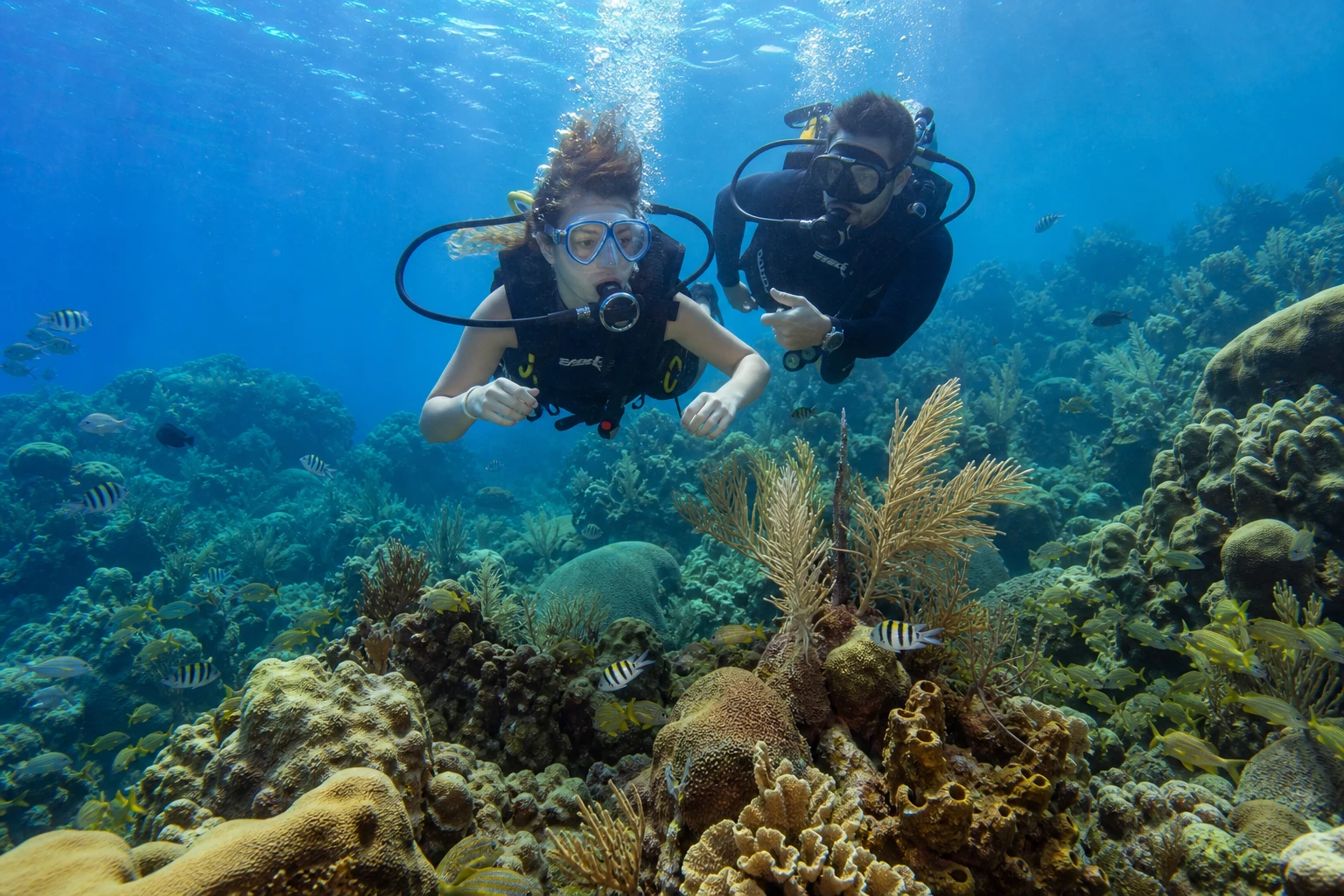
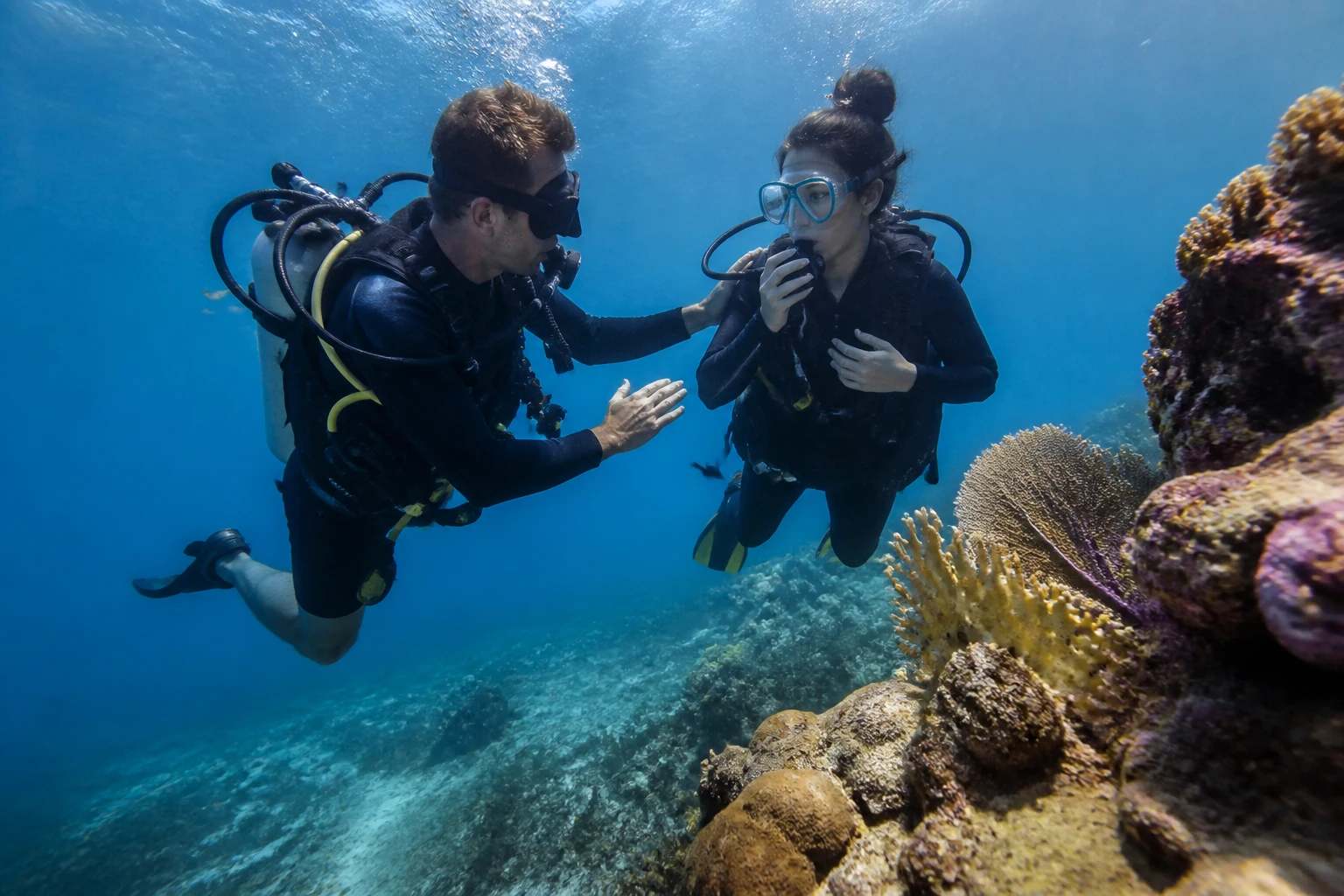
For complete beginners, the first decision is simple: are you sampling scuba or working toward certification? A Discover Scuba-style experience is a supervised introduction, not a certification. One Belize operator, for example, lists introductory diving to a 40-foot maximum and beginner reef dives in the 35 to 65-foot range. Treat those depths as an example, not a countrywide standard. The right program begins with a clear explanation of what you will learn, where you will go, and how closely you will be supervised.

Belize Int'l Airport to Belize City Water Taxi or Belize City to BZE Airport
We're more guaranteed than getting a cab. The service more professional and tailored to meet each guest needs.
Discover Scuba, a referral, or a full beginner course
A supervised introductory session suits travelers who are curious about scuba but do not yet want the structure of a certification course. Expect an orientation, basic skill practice, and a closely supervised underwater experience. Ask the operator how much time is spent practicing before the open-water portion, what the maximum depth is, and what conditions would prompt a change of site or cancellation.
A referral route works for travelers who have started academic or confined-water training at home and plan to complete the open-water portions in Belize. It can preserve valuable vacation time, but the paperwork and required training steps need to align before you arrive. Send your training documentation ahead of time and confirm what remains to be completed, along with the expected number of days on the water.
A full entry-level course is the better fit when certification is the main purpose of the trip. Build your lodging and other plans around training rather than squeezing lessons between excursions. A course is less about collecting a card than developing calm, repeatable habits: buoyancy control, communication, problem-solving, and the judgment to end a dive when conditions or comfort demand it.
Choose a Belize base that keeps your first dives simple
For a beginner, the best base is often the one that reduces transfer time and lets you spend more of the day focused on training. Ambergris Caye is a practical choice for travelers who want a caye-based stay and organized diving access. The Belize Airport to San Pedro transportation guide can help you compare the transfer options before you book lodging or a course.
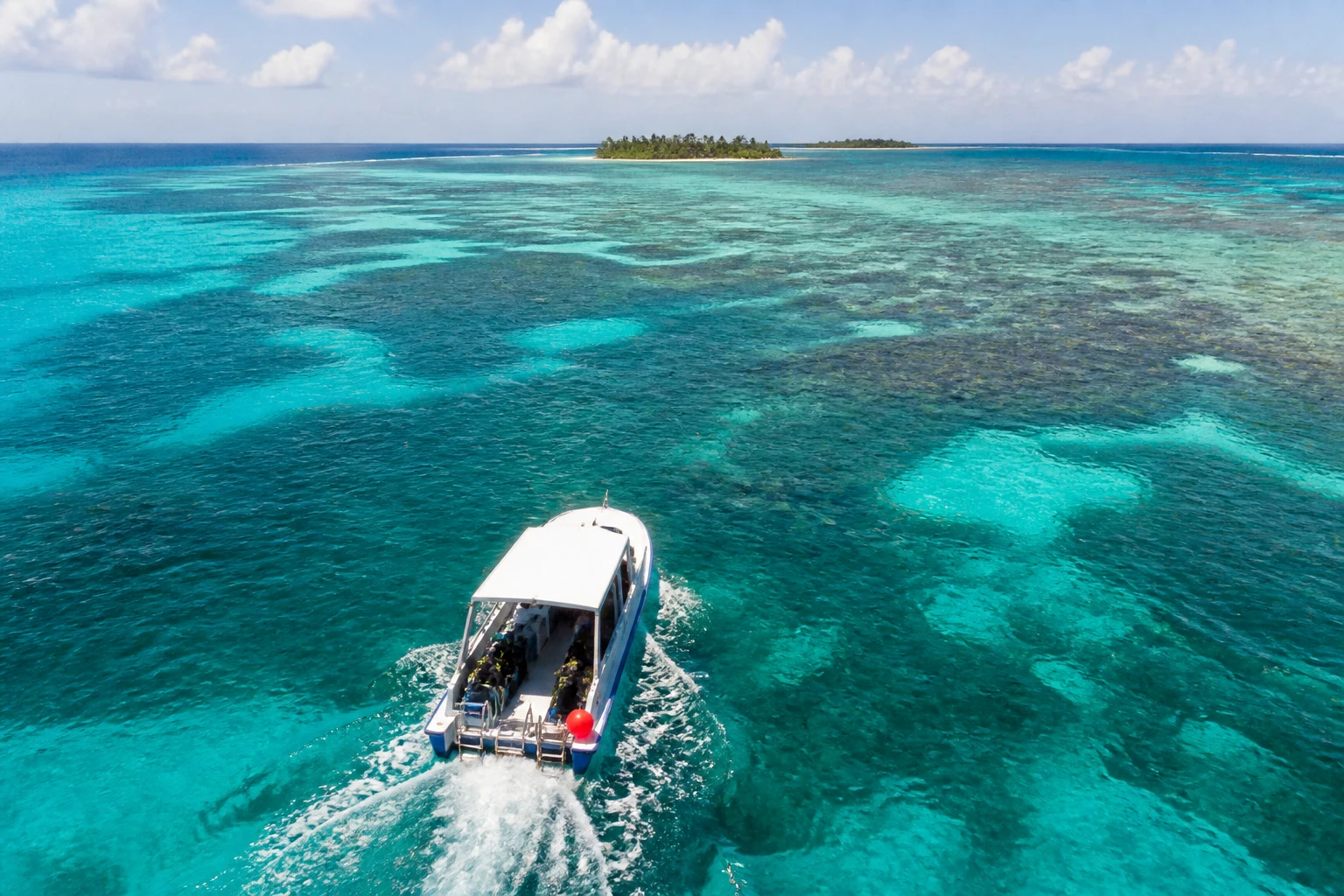
Belize Tourism Board sample planning information estimates the journey from Belize City to San Pedro at about 1.5 hours by ferry or about 15 minutes by flight. These are planning estimates rather than a timetable, so build in connection time and check the current schedule before locking in a first dive. Avoid arranging a demanding dive commitment immediately after a tight arrival connection.
Your accommodation location matters as much as the island name. Ask where the boat departs, how you reach it, whether equipment storage is available, and how early you need to arrive. Travelers comparing neighborhoods, resorts, and logistics can also use the Ambergris Caye travel guide to shape a stay around the part of the island that suits their plans.
Plan reef days before chasing the Great Blue Hole
The Great Blue Hole is an iconic Belize sight, but it is not automatically the best first-day target for a new diver. Official sample itineraries frame Blue Hole and Turneffe trips as full-day guided outings. That distance, time on a boat, and changing offshore conditions make a local or near-base reef experience a more sensible first priority for many beginners.
Use the first underwater days to learn how you respond to a mask, regulator, boat travel, equalizing, and changing sea conditions. After that, talk with your instructor or dive leader about a longer offshore outing. The Great Blue Hole Belize guide is useful for understanding the character and planning commitment of that famous excursion, but do not let a bucket-list image override your comfort, training level, or the day’s sea state.
Belize’s reef system is broad enough that no single destination represents every condition. Patch reefs, the barrier reef, and offshore atolls offer different settings and travel demands. Ask for the planned site rather than booking on a vague promise of “Belize diving.” A thoughtful operator will explain the route, expected conditions, depth profile, and why the day’s site fits your experience.
When to go: water temperature, visibility, and weather
Diving is possible year-round in Belize. Broad planning ranges put water temperatures around 78°F from November through July, warming to roughly 82 to 84°F from August through October. Reef and atoll visibility is often stronger than visibility inside the reef, but conditions can change quickly with wind, rain, current, and the specific location of the dive.
For beginners, the best window is less about chasing a perfect calendar month and more about allowing flexibility. Schedule early training or introductory sessions first, then leave a buffer day before any ambitious boat trip. Listen when the crew adjusts a plan for weather. Shore conditions do not reliably predict the conditions at a dive site, and strong currents can occur in Belize waters.
Still comparing Beginner Scuba Diving Belize?
Ask for tour ideas, hotel suggestions, or a simple trip plan that combines both.
Trip Helper
Book a responsible operator and ask direct questions
Belize has a national code of practice for recreational scuba diving. Still, the practical choice is yours: select a reputable, certified operator and use the booking conversation to understand how the day will run. An operator that welcomes specific questions is especially valuable when you are new to scuba and still learning what a well-organized dive day looks like.
- Who will supervise the dive, and what is the maximum student-to-instructor or guide ratio?
- Which site is planned, what depth and conditions are expected, and what is the backup plan if weather shifts?
- What safety equipment is carried, including oxygen, communications, and emergency supplies?
- What are the emergency procedures, nearest support options, and weather cancellation or rebooking policy?
- What is included in the quote: equipment, instruction, marine fees, fuel charges, meals, taxes, transfers, and tips?
Request an itemized current quote instead of relying on a headline price. Beginner programs, equipment rental, transportation, park-related charges, and offshore trips can have different inclusions. Confirm the cancellation terms, particularly for weather interruptions. A short conversation before payment is far easier than sorting out an unexpected extra charge at the dock.
Health, fitness, and safety habits for new divers
Be honest about your health and comfort in the water. A fitness assessment before scuba or snorkeling activities is a sensible step, particularly if you have a medical condition, have been inactive, or feel uncertain about swimming and boat movement. Share relevant information with the operator before booking so it can advise on the appropriate program and any medical clearance requirements.
Remote sites create a different risk calculation. Emergency help can take longer to reach offshore or isolated areas, and serious injury or illness can require evacuation. Medical-evacuation coverage is worth considering for a Belize dive trip. For many first-timers, a local reef itinerary offers the more comfortable introduction: less transit, fewer variables, and an easier path back to shore if the day is not going as planned.
On the water, follow the briefing, stay with your assigned professional, and speak up early if you are cold, anxious, unable to equalize, or simply not enjoying the dive. Those are normal signals to pause or end an activity, not a failure. Do not assume beaches, rivers, or boat excursions have lifeguards, warning signs, or identical safety equipment. Check the boat’s safety setup and respect its weather call.
What to pack and how to organize your itinerary
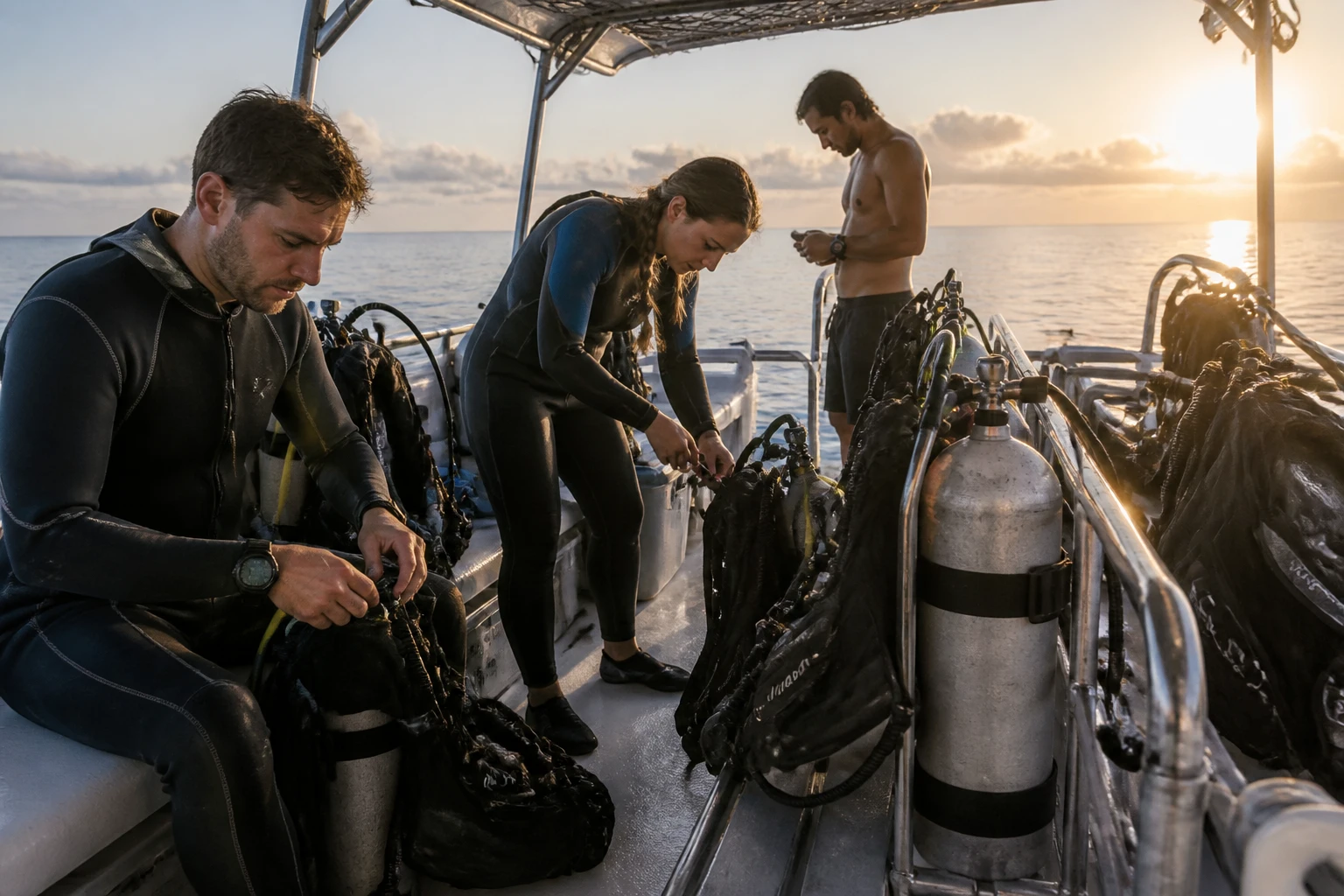
Bring a swimsuit, sun protection suitable for boat days, a reusable water bottle, a dry bag for essentials, motion-sickness remedies if you use them, and any required training documents. Ask whether towels, drinking water, meals, weights, wetsuits, and other gear are included. Bring a light layer for the ride back, when wind and wet skin can feel cooler than the tropical forecast suggests.
Give yourself a day to arrive, settle in, and confirm your meeting point before a first in-water session. Arrange transfers carefully, particularly if arriving through Belize City. Current U.S. travel guidance advises increased caution because of crime and advises against driving between cities after dark. This is a ground-transport consideration, separate from dive planning, but it is a good reason to use well-organized transfers rather than improvising late in the day.
Accessibility needs deserve an early, detailed conversation. Belize-wide facilities and services vary, so ask a specific hotel and dive operator about the boarding method, assistance or lift arrangements, accessible bathrooms, transfer vehicles, storage for mobility equipment, and medical-support plans. Get these details in writing before committing to a package; practical access depends on the individual boat, dock, room, and transfer.
A beginner-friendly Belize diving plan
- Arrive with enough time to settle into your base and confirm dive logistics.
- Begin with a Discover Scuba session, a course day, or an easy guided reef dive that matches your training.
- Use the first day to assess comfort with equipment, equalizing, boat travel, and conditions.
- Add a second reef day if you are enjoying the experience and your instructor or operator agrees it is appropriate.
- Consider a full-day offshore trip only when its conditions, depth, travel time, and emergency considerations feel right for your experience.
Belize works best for beginner scuba divers who approach the reef with patience. The destination offers extraordinary range, but your first goal should be a well-run, appropriately scaled experience rather than the longest boat ride or deepest itinerary. Choose a clear program, ask good safety questions, start close to your base, and let your confidence guide what comes next.
Frequently asked questions
Can complete beginners scuba dive in Belize?
Yes. A supervised Discover Scuba-style experience is designed as an introduction for people who are not yet certified, while referral and entry-level course options suit travelers pursuing certification. Confirm the planned site, depth, medical prerequisites, and supervision arrangements with the operator.
Is the Great Blue Hole suitable for a first scuba dive?
It is usually better treated as a separate, full-day guided outing rather than your automatic first dive plan. Start with a nearer reef experience, then consider the trip after discussing conditions and your experience with a dive professional.
What is the best time of year for beginner scuba diving in Belize?
Belize offers diving year-round. Water temperatures are broadly around 78°F from November through July and 82 to 84°F from August through October, but visibility and sea conditions vary by weather and dive site.
How do I get from Belize City to San Pedro for diving?
Sample Belize Tourism Board planning information estimates about 1.5 hours by ferry or about 15 minutes by flight. Check the current schedule and leave connection time before booking a dive activity.
What should I ask a Belize dive operator before booking?
Ask about the planned site and depth, instructor ratio, equipment, oxygen and emergency procedures, communications, weather policy, group size, and every item included in the price. These details help match the day to your experience and avoid surprises.
Are Belize dive trips accessible for travelers with mobility needs?
Accessibility depends on the individual hotel, dock, boat, and transfer. Confirm boarding assistance, lift options, accessible bathrooms, equipment storage, transfer access, and medical-support arrangements directly with your chosen providers before booking.
Belize Int'l Airport to Belize City Water Taxi or Belize City to BZE Airport
We're more guaranteed than getting a cab. The service more professional and tailored to meet each guest needs.