Great Blue Hole Belize Guide
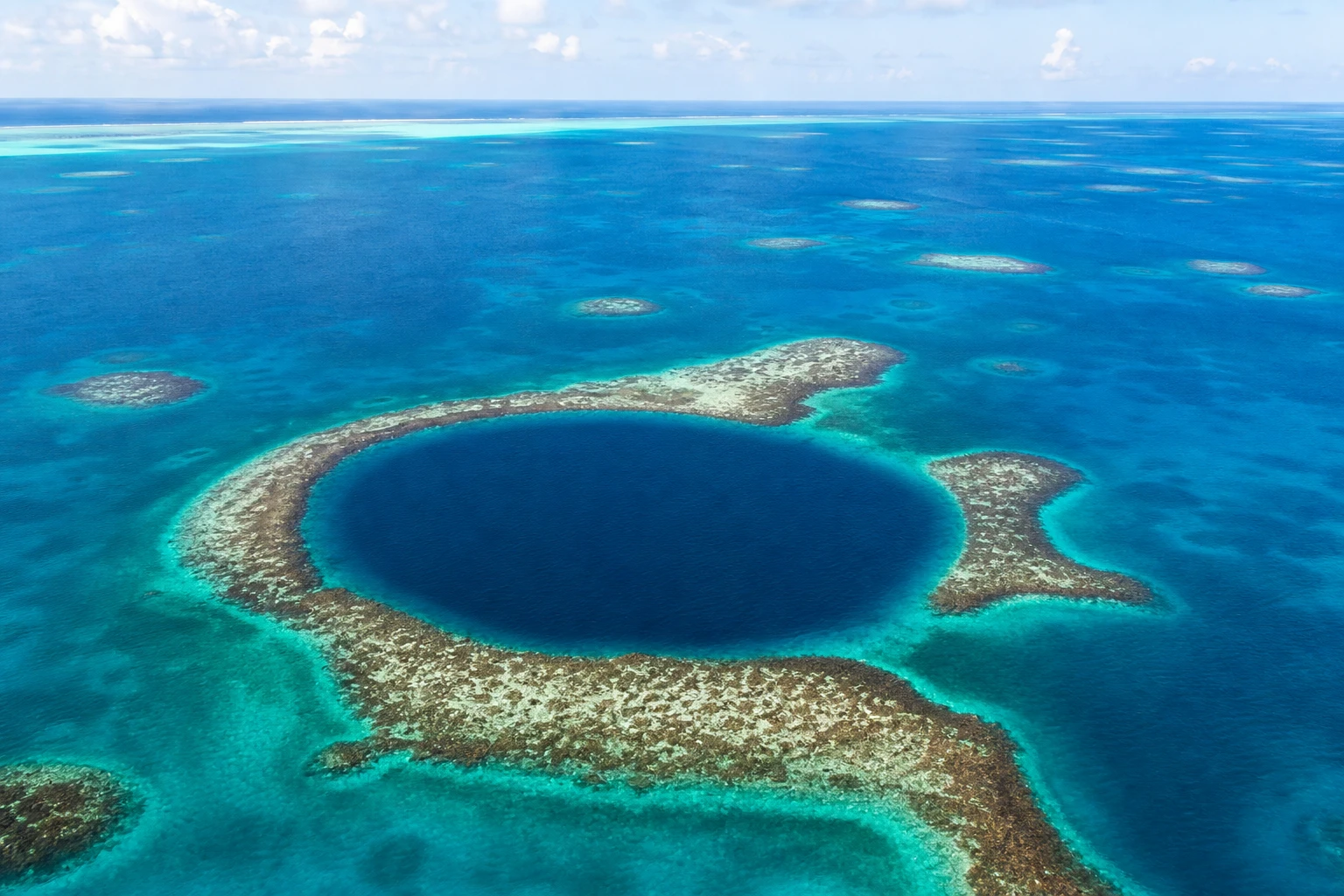
The Great Blue Hole sits far offshore within Lighthouse Reef Atoll, where its dark circular center interrupts the surrounding shades of Caribbean blue. Reaching it requires more planning than visiting a beach or near-shore reef. Travelers must choose among a dive-boat excursion, a live-aboard dive trip, a snorkeling excursion, or an aerial tour. The best option depends on the view you want, your diving ability, your comfort with offshore travel, and the time available in your Belize itinerary.
Great Blue Hole trip essentials
- Choose a scenic flight for the clearest view of the Blue Hole's famous circular outline.
- Choose scuba diving to experience the deep walls, overhangs, stalactites, and cave features.
- Do not assume snorkeling reveals the deep geological formations seen by divers.
- Confirm the operator's exact departure point, inclusions, safety equipment, and cancellation policy before paying.
- Keep a buffer day because flights and marine excursions can be affected by weather.
- Use a sustainable, licensed operator and follow all reef-protection instructions.
The central decision is simple: the view from above and the experience below the surface are fundamentally different. A scenic flight reveals the complete shape in a single sweeping view. Scuba takes qualified visitors inside the geological formation, but it demands more preparation and a reputable certified operator. Snorkeling offers time on the water without providing access to the Blue Hole's deep cave environment.
Where the Great Blue Hole is located
The Great Blue Hole is inside Blue Hole Natural Monument at Lighthouse Reef Atoll, about 43 miles from mainland Belize. The monument forms part of the protected areas within the UNESCO-listed Belize Barrier Reef Reserve System. Its offshore position is central to planning. This is not an attraction where visitors arrive independently, park nearby, and walk to a viewing platform.
The site belongs to a much larger marine environment. Reading about the broader Belize reef can help place the Blue Hole within the country's network of coral reefs and protected habitats. Travelers building a longer coastal trip may also want to compare the islands of Belize before deciding where to sleep and which departure point works best.
Scenic flight, scuba dive, or snorkeling excursion?
| Visit mode | Best reason to choose it | Main limitation | Confirm before booking |
|---|---|---|---|
| Scenic flight | See the complete circular outline from above | Weather-dependent and involves small-aircraft travel | Departure point, aircraft access, baggage rules, cancellation terms |
| Scuba excursion | See deep walls, overhangs, stalactites, and cave features | Requires scuba capability and greater physical preparation | Certification and experience requirements, equipment, emergency plan |
| Live-aboard diving | Include the Blue Hole within a dive-focused offshore itinerary | A larger time commitment than a single excursion | Itinerary, operator credentials, inclusions, medical procedures |
| Snorkeling excursion | Visit the marine setting without scuba diving | Does not provide access to the deep cave formations | Exact itinerary, supervised areas, flotation gear, safety equipment |
No visit mode delivers every perspective. The circular shape is strongest from the air, while the geological interior is a scuba experience. Snorkelers should ask exactly where they will enter the water and what their itinerary includes. Marketing language can blur the difference between visiting the monument and seeing its deep formations, so request a plain description of the actual activity.
What diving the Great Blue Hole involves
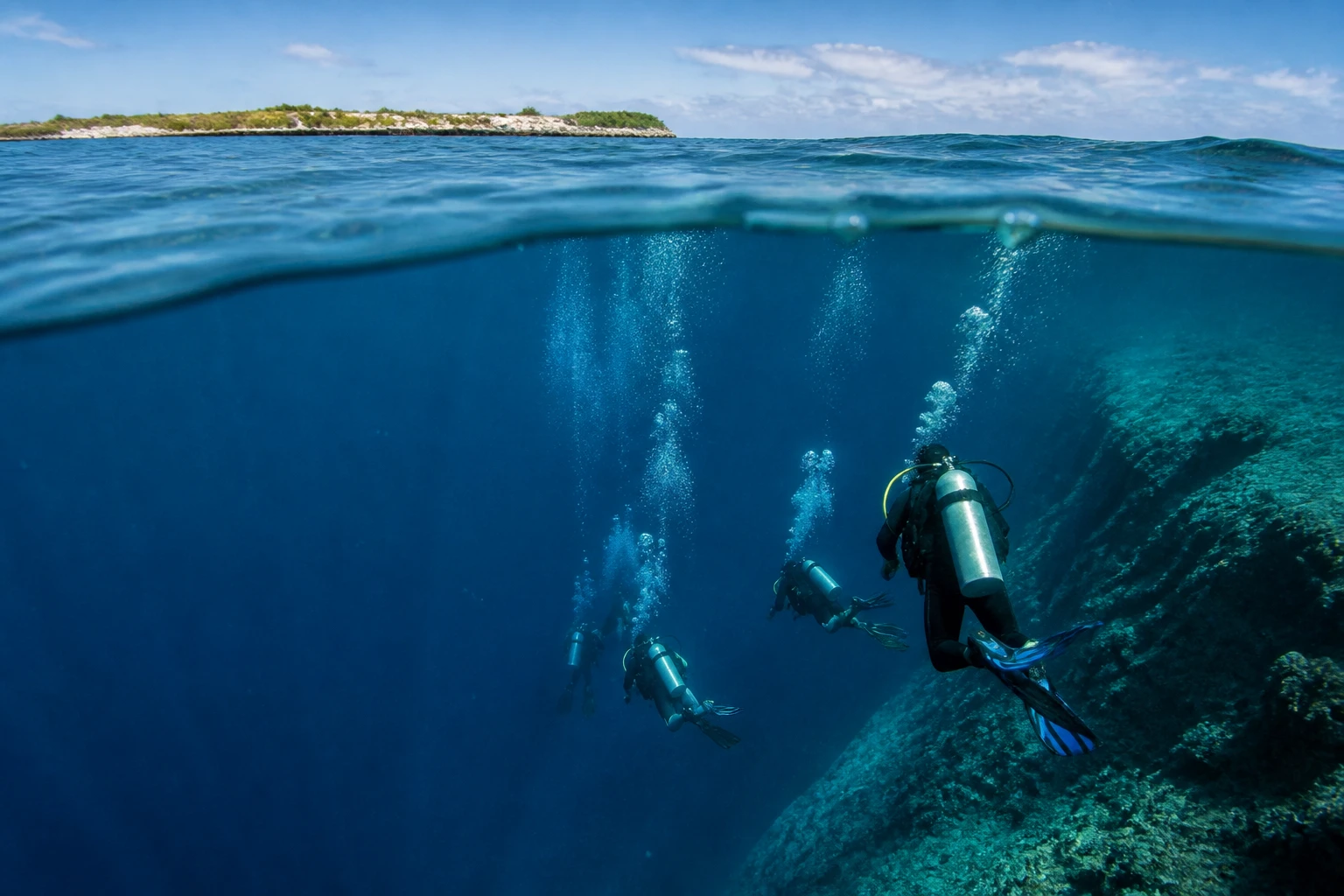
Scuba is the only visit mode identified by official tourism information as a way to experience the deep vertical walls, overhangs, stalactites, and cave features. The formation extends more than 400 feet deep, although an excursion does not necessarily visit its greatest depth. The important booking question is not simply whether a company goes there. Ask what qualifications and recent experience it requires for the planned dive profile.
The Blue Hole is remote and demands more physical preparation than casual sightseeing. Divers should give the operator an accurate account of certification, recent dives, health conditions, equipment familiarity, and comfort in the water. The U.S. State Department advises travelers participating in scuba or snorkeling activities in Belize to consider a fitness assessment and select a reputable certified operator.
Questions divers should ask
- What certification and logged experience are required for this specific dive?
- What is the planned dive profile, and how can conditions change it?
- Are tanks, weights, exposure protection, and other rental items included?
- What communication, oxygen, first-aid, life-jacket, and emergency equipment is carried?
- What accident insurance or medical-evacuation arrangements apply?
- What happens if weather prevents the boat from reaching the site?
A responsible operator should answer those questions clearly before the trip. If the explanation is vague, rushed, or dismissive, keep looking. A famous dive site does not reduce the need for conservative decisions, honest self-assessment, and a plan for delayed medical help in a remote area.
Seeing the Blue Hole on a scenic flight
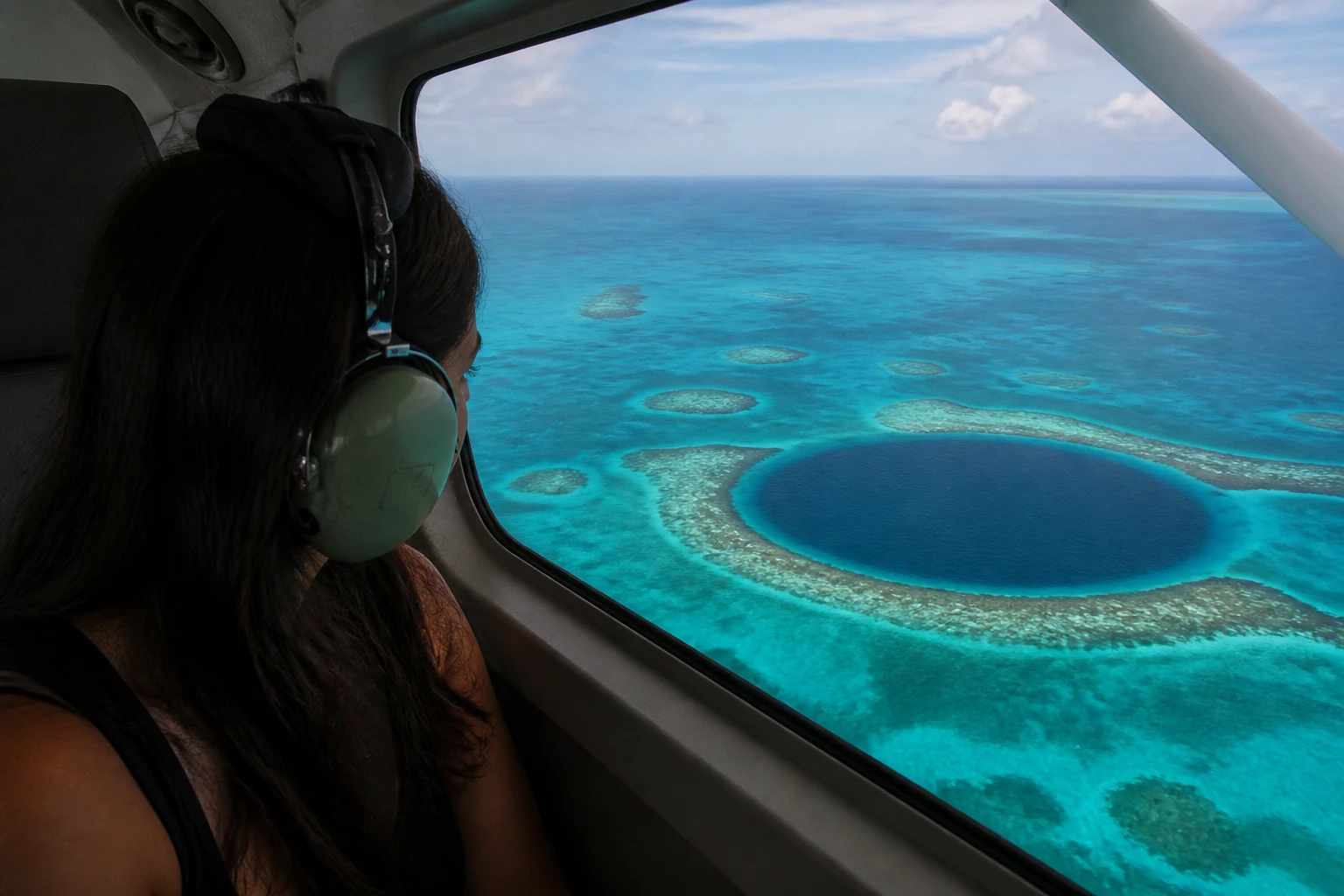
A scenic flight is the strongest choice for travelers who want the recognizable overhead view. From the air, the dark center, pale reef rim, and surrounding sea become one graphic composition. It is also the main non-diver alternative for understanding the formation's circular outline. Travelers who care most about photography and visual scale may find this perspective more satisfying than an offshore surface visit.
Belize tourism information describes aerial sightseeing as departing daily, but that should not be treated as a guaranteed personal schedule. Flights remain dependent on weather and operator availability. Confirm the date, departure point, check-in instructions, aircraft arrangements, and cancellation terms directly with the chosen company. A buffer day gives you room to reschedule if conditions interfere.
Small-aircraft access can present challenges for travelers with limited mobility, sensory needs, or medical concerns. Obtain written information about boarding steps, aircraft transfers, seating, assistance, and emergency procedures. Do not rely on a general statement that an experience is accessible, since Belize's transportation and tourism infrastructure may offer fewer accommodations than travelers expect in the United States.
What snorkeling can and cannot show you
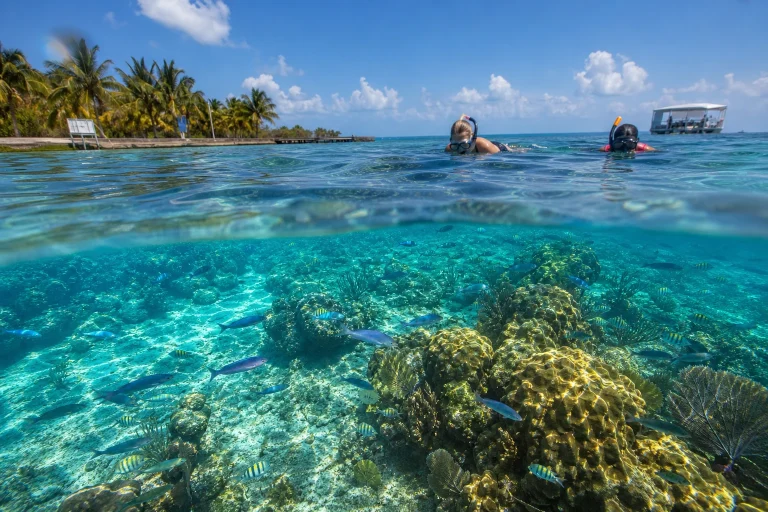
Official tourism information mentions snorkeling excursions associated with the Blue Hole, but it does not establish that snorkelers can see the deep stalactites or cave formations. Those features require scuba. Treat snorkeling as a separate surface-based experience and ask the operator where snorkeling occurs, how participants are supervised, and what marine conditions may affect the plan.
This distinction matters when comparing tours. A trip may visit the same protected monument while giving divers and snorkelers very different experiences. If your main goal is the perfect circular view, consider a flight. If your priority is relaxed time near the reef, compare the Blue Hole excursion with other snorkeling and reef activities among the best things to do in Belize.
How to get to the Great Blue Hole
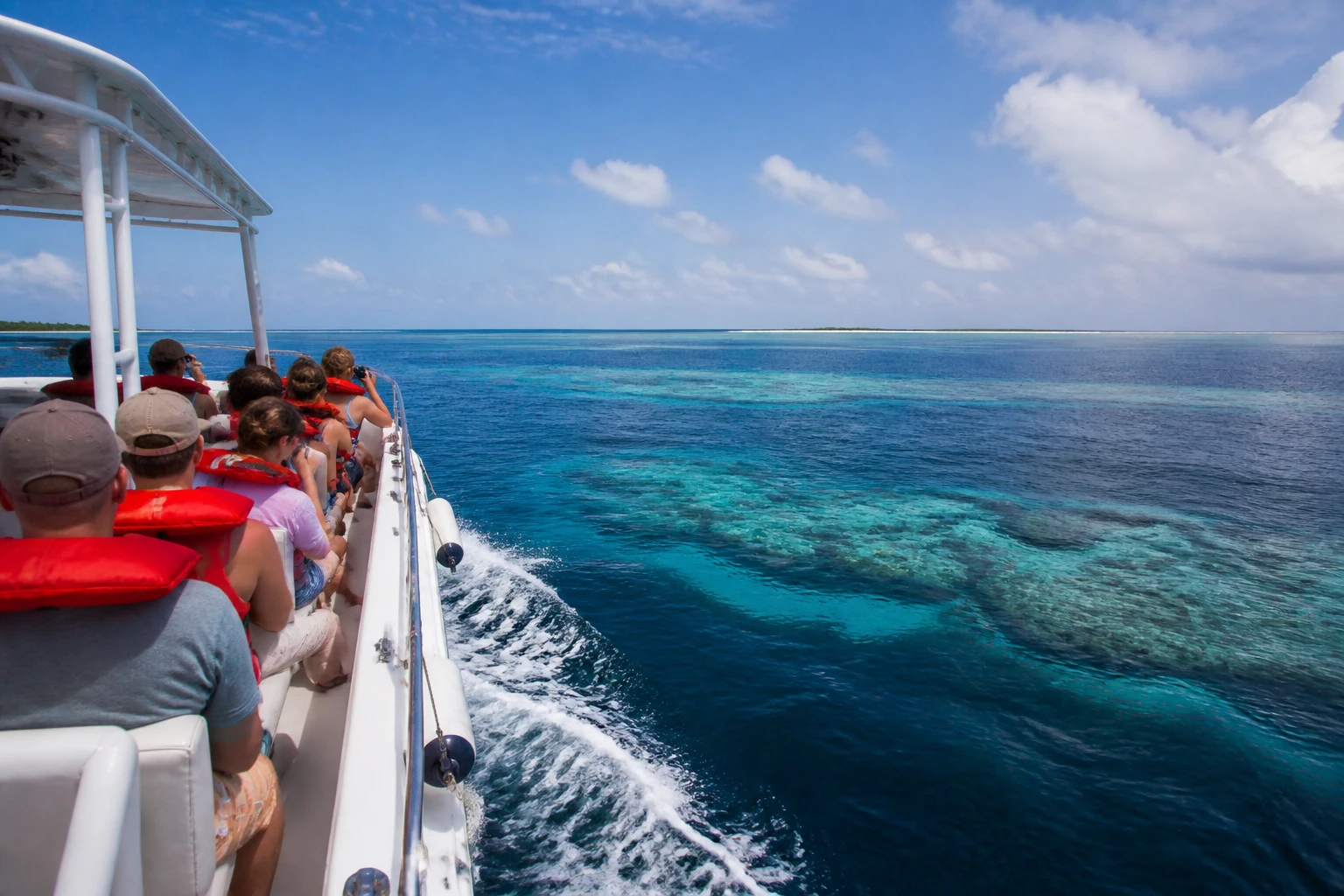
There is no practical independent route described by official tourism information. Visitors reach the Great Blue Hole on a day dive boat, a live-aboard dive vessel, or an air tour. This means the operator controls the meeting point, departure schedule, route, and return logistics. Book the activity before locking in nearby accommodation or onward transportation.
Ambergris Caye, including San Pedro, and Belize City can serve as likely operational gateways, but departure points vary. Never assume a tour includes pickup from your hotel or transport across Belize. Ask for the exact check-in location and time in writing. Then use a where to stay in Belize guide to choose accommodation that fits that confirmed departure rather than selecting a base on guesswork.
Confirm these transport details
- Get the exact departure point and check-in time.
- Ask whether hotel pickup or transfers are included.
- Confirm what happens if weather delays or cancels the excursion.
- Check the expected commitment before arranging same-day onward travel.
- Ask about baggage limits, gear storage, and restroom access.
- Leave enough flexibility to move the trip to a buffer day.
The offshore location means this outing consumes more time than activities close to the coast. Avoid building a tight connection around it. A delayed return could affect a domestic transfer, an international flight, or a ferry connection, even when the operator has handled the excursion responsibly.
Weather, timing, and the value of a buffer day
Both aircraft and marine excursions can be disrupted by weather. Conditions may affect visibility, comfort, routing, or the ability to operate at all. A general statement that flights depart daily does not override the operator's decision on your scheduled date. Build flexibility into the itinerary and check for updates shortly before departure.
A buffer day is especially useful if the Blue Hole is a major reason for visiting Belize. Schedule the excursion before your last available day rather than immediately before leaving the country. Ask how the operator handles weather decisions, when it communicates changes, and whether it offers rescheduling, refunds, or another remedy. Policies can vary, so obtain the terms before payment.
How much a Great Blue Hole trip costs
There is no reliable universal price for a Great Blue Hole dive, snorkeling trip, or scenic flight in the available evidence. Quotes can differ because the included services differ. Departure transport, tanks, rental equipment, meals, protected-area fees, taxes, and weather policies may all change the final amount. Compare written, date-stamped quotes rather than relying on an undated average found online.
Use a like-for-like price checklist
- Base excursion or flight price
- Transport to the departure point
- Dive or snorkeling equipment rental
- Protected-area or park fees
- Meals, drinks, and taxes
- Cancellation, rescheduling, and refund terms
- Accident insurance or medical-evacuation provisions
The cheapest headline quote may not be the lowest final cost. It may also omit services or protections that matter at a remote marine destination. Compare operator credentials and safety procedures alongside price. A clear quotation should identify both inclusions and exclusions without forcing you to reconstruct the total at check-in.
What to bring for the day
Packing depends on the visit mode, so use the operator's list as the controlling guidance. For any excursion, carry booking details, identification requested by the company, necessary medication, and suitable sun and weather protection. Divers should bring proof of certification and any records the operator requires. Keep essential medication and documents with you rather than in baggage that may be separated during a transfer.
Practical packing checklist
- Operator-requested identification and booking confirmation
- Dive certification and requested dive records, if applicable
- Personal medication and relevant medical information
- Sun protection suitable for a marine environment
- Secure clothing and footwear appropriate to the operator's transport
- A waterproof or protective pouch for essential small items
- Only the baggage and equipment permitted by the operator
Ask before bringing bulky camera equipment, personal dive gear, or large bags. Aircraft and boats can have specific storage and baggage constraints. Travelers prone to discomfort on boats or small aircraft should discuss appropriate preparation with a qualified medical professional rather than relying on improvised advice at departure.
Safety, insurance, and remote-area planning
As of June 18, 2026, the U.S. State Department advised U.S. travelers to exercise increased caution in Belize because of crime and to reconsider travel to Southside Belize City. This is a countrywide advisory, not a notice that the Great Blue Hole is closed or specifically unsafe. Travelers should review current official guidance again shortly before departure because advisories can change.
The same guidance warns that emergency medical help may be delayed or unavailable in remote areas. For scuba and snorkeling, it recommends choosing a reputable certified operator and checking for safety equipment such as life jackets and radios. It also advises considering a fitness assessment, accident insurance, and travel or medical-evacuation coverage.
Remote beauty deserves practical respect. Verify the operator, equipment, insurance, and emergency plan before the coastline disappears behind you.
Insurance terms deserve close attention. Confirm whether a policy covers scuba at the planned profile, snorkeling, small-aircraft sightseeing, remote evacuation, and the specific activities on your booking. Read exclusions rather than assuming that a general travel policy includes every marine activity.
Accessibility questions to ask before booking
The Great Blue Hole is not a low-barrier attraction. Access involves offshore boating or a small-aircraft flight, and diving requires scuba capability. Belize's transport, lodging, communication, information, and general infrastructure may offer limited accessibility compared with U.S. standards. Individual operators and vessels can differ, so detailed written confirmation is essential.
- How many boarding steps, ladders, or transfers are involved?
- Can the operator assist with mobility equipment, and how will it be stored?
- Is a restroom available and accessible during the excursion?
- What seating and communication accommodations are possible?
- Can a companion or support person participate under the same booking?
- How are medical needs handled during delays or emergencies?
Share relevant needs before paying, not at the dock or airfield. Ask the operator to describe the actual route through check-in, boarding, the activity, and disembarkation. A specific explanation is more useful than a yes-or-no accessibility label.
Visiting a protected marine monument responsibly
Blue Hole Natural Monument lies within the Belize Barrier Reef Reserve System, a UNESCO World Heritage property containing important reef and marine habitats. Choose a sustainable, licensed operator and follow instructions intended to protect the reef. Do not treat those rules as optional inconveniences. They help preserve the environment that makes the trip worthwhile.
Responsible behavior includes following designated activity areas, avoiding contact with reef structures, securing loose equipment, and obeying the operator's wildlife and waste guidance. Ask how the company manages waste and limits physical impact. A strong operator should be able to explain its environmental procedures as clearly as its departure schedule.
Is the Great Blue Hole worth adding to your Belize itinerary?
The Great Blue Hole makes the most sense for travelers who value one of two experiences: the complete aerial view or a specialist scuba encounter with the formation's interior. It is a weaker fit for anyone expecting easy independent access, a short near-shore outing, or a single activity that looks the same for divers and snorkelers.
Choose the flight if the iconic circle is your priority and small-aircraft travel works for you. Choose diving if you have the required capability, preparation, and confidence in a certified operator. Consider snorkeling or another reef outing if you want surface-level marine time without the demands of the dive. In every case, confirm logistics and reserve a weather buffer before finalizing the rest of the trip.
Frequently asked questions
Where is the Great Blue Hole in Belize?
It is within Blue Hole Natural Monument at Lighthouse Reef Atoll, about 43 miles from mainland Belize. The monument is part of the protected areas in the UNESCO-listed Belize Barrier Reef Reserve System.
Can you visit the Great Blue Hole without scuba diving?
Yes. A scenic flight offers the clearest view of its circular outline, and official tourism information also mentions snorkeling excursions. Snorkeling does not provide access to the deep stalactites and cave formations seen on a scuba dive.
Can you travel to the Great Blue Hole independently?
Official tourism information does not indicate a practical self-guided route. Visitors generally reach it by a day dive boat, live-aboard dive vessel, or air tour. Confirm the exact departure point with the chosen operator.
What is the best way to see the Great Blue Hole?
A scenic flight is best for seeing the complete circular shape. Scuba is the choice for experiencing the deep walls, overhangs, stalactites, and cave features. The better option depends on your priorities and diving capability.
How much does a Great Blue Hole tour cost?
No reliable universal price was established in the available evidence. Request current written quotes and compare transport, equipment, protected-area fees, meals, taxes, insurance provisions, and weather-related cancellation terms.
Do Great Blue Hole tours operate in bad weather?
Marine excursions and scenic flights are weather-dependent. Confirm conditions and the operator's decision before departure. Schedule a buffer day if the experience is an important part of your Belize trip.
Is the Great Blue Hole accessible for travelers with limited mobility?
It is not a low-barrier attraction because access involves offshore boating or a small-aircraft flight, while diving requires scuba capability. Ask for written details about boarding, transfers, restrooms, assistance, equipment storage, and emergency procedures before booking.
Is the Great Blue Hole safe to visit?
The cited Belize travel advisory is countrywide and does not state that the Great Blue Hole is closed or specifically unsafe. Its remote location requires careful operator selection, appropriate safety equipment, honest fitness assessment, and suitable travel or medical-evacuation coverage.
Still comparing Sightseeing?
Ask for tour ideas, hotel suggestions, or a simple trip plan that combines both.