Hol Chan Marine Reserve Guide
Hol Chan Marine Reserve brings several defining Belizean coastal habitats together in one protected area near Ambergris Caye. Centered on a natural channel through the barrier reef, the reserve lies about four miles south of San Pedro. Visitors reach it by boat, making tour choice, marine conditions, and clear booking details the foundations of a smooth trip.
- Plan to visit by boat from San Pedro rather than as a self-guided shore excursion.
- Ask for the complete tour price, including reserve fees, equipment, taxes, and optional gratuity.
- Check Belize’s marine forecast shortly before departure because conditions can affect boat trips.
- Expect structured site use because reserve rules govern moorings and vessel time in recreational areas.
- Confirm boarding, ladders, flotation support, and onboard arrangements if anyone has mobility or swimming concerns.
The reserve suits travelers who want a focused marine outing close to San Pedro and are comfortable joining an organized boat excursion. It also rewards visitors interested in conservation, since the protected area links coral reef, seagrass, mangrove, lagoon, and coastal environments rather than treating the reef as an isolated attraction.
This guide explains how access works, what to compare before booking, and how to prepare without relying on outdated prices or schedules. Tour arrangements vary, so review your confirmation for the meeting point, departure time, equipment, fees, cancellation terms, and planned stops.
Why Hol Chan is an important protected seascape
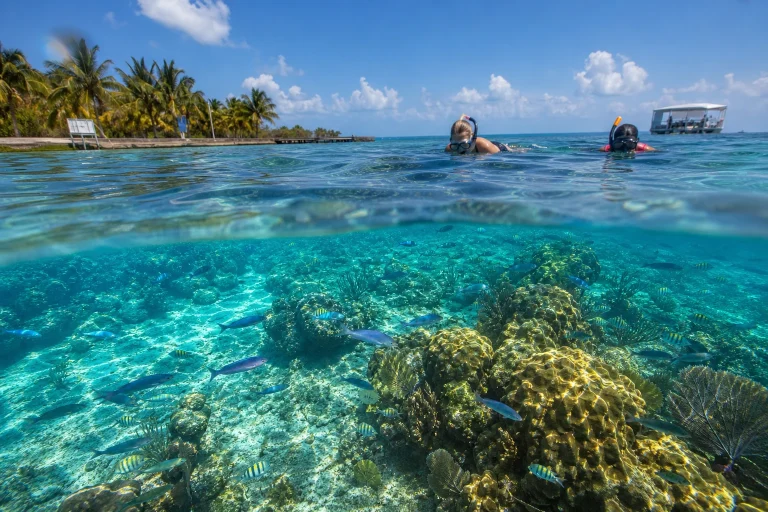
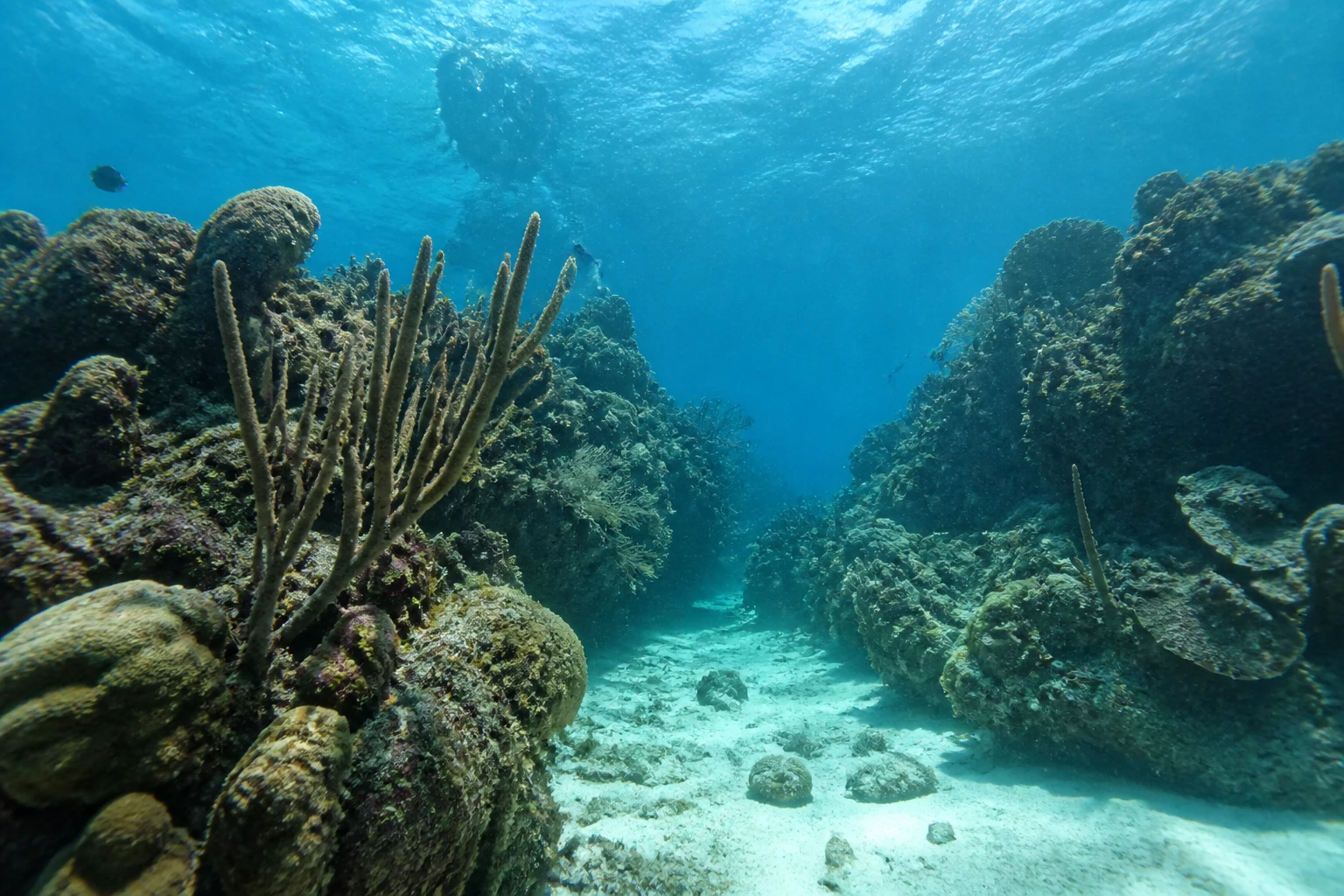
Hol Chan Marine Reserve protects 102,400 acres, or 41,440 hectares, of connected marine and coastal habitat. Its protected environments include coral reef, seagrass meadows, and coastal mangrove swamps. That connection matters because a reserve can protect ecological relationships across several habitats, not simply a single reef site.
The reserve was established in July 1987. Shark Ray Alley was added in 1999, and a further expansion took effect on February 17, 2016. The enlarged reserve includes areas such as Mexico Rocks, Mata and Frances Lagoon, Los Bajos, and Los Salones.
These expansions explain why current descriptions cover a much broader area than older material about Hol Chan. For trip planning, focus on the exact sites named in your excursion rather than assuming every tour explores the reserve’s full extent. A booking labeled “Hol Chan” can still have a specific route and set of stops.
How to reach Hol Chan from San Pedro
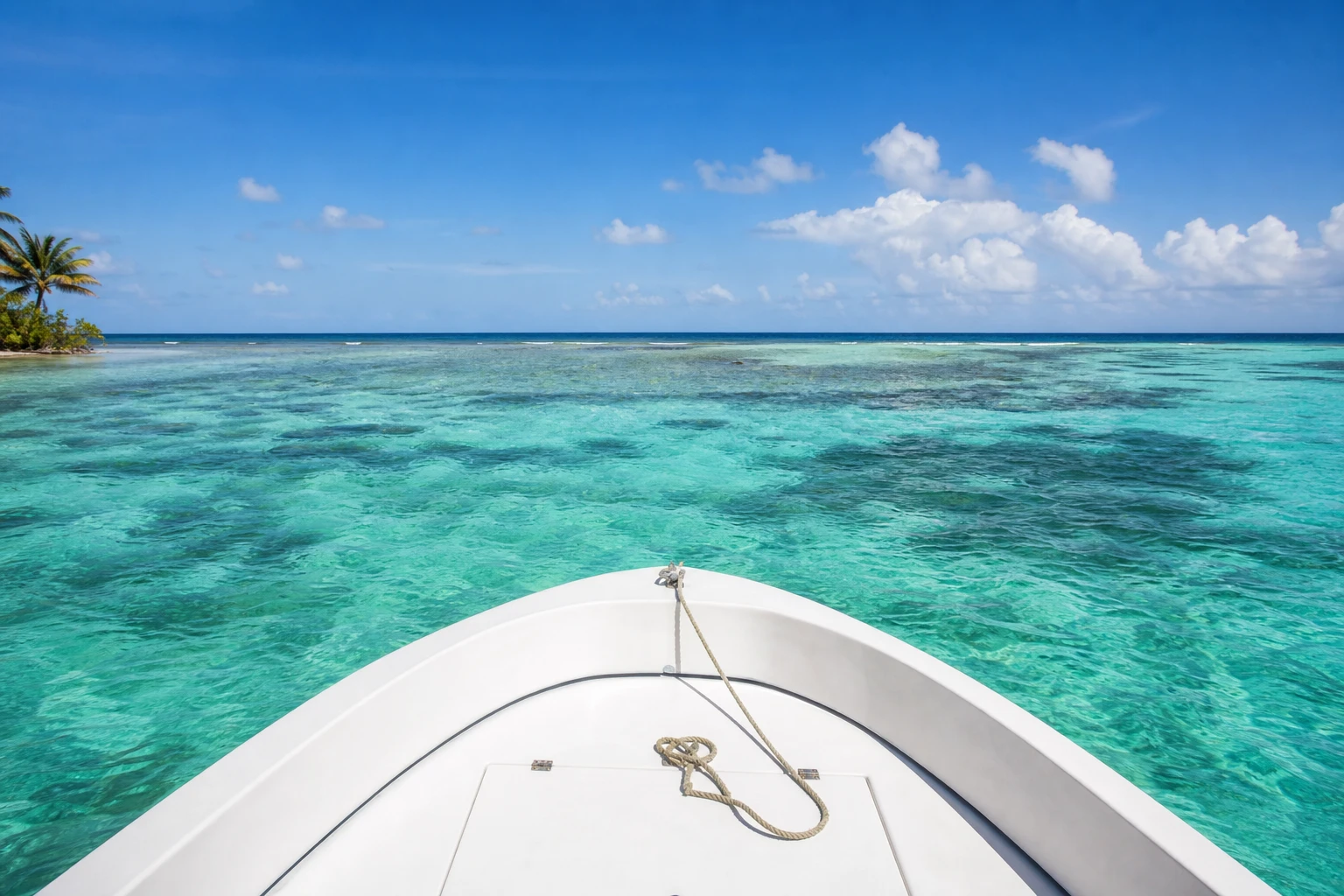
San Pedro on Ambergris Caye is the practical base for visiting the reserve. Hol Chan Channel is about four miles south of town, and visitors should plan on boat access. There is no established self-guided procedure that turns the reserve into a walk-up attraction, so arrange the outing through a suitable boat operator.
If you are still choosing a base, the Ambergris Caye Travel Guide can help place San Pedro within a wider island itinerary. Travelers arriving from Belize’s main international gateway can also use the Belize Airport to San Pedro Transportation Guide to plan the journey to the island before scheduling a marine excursion.
Before departure, check where the boat meets and how early you need to arrive. Meeting arrangements can differ between operators, hotels, and packages. Build a little space around the excursion rather than placing a flight or another time-sensitive transfer immediately afterward, especially when marine weather is unsettled.
Choosing a snorkeling or diving excursion
Choose the tour by comparing its route, group format, equipment, and total price. The broad reserve contains several named areas, so the words “Hol Chan tour” do not describe every operational detail. Ask which sites are planned and whether the itinerary depends on sea conditions or reserve management decisions.
| Booking detail | What to check |
|---|---|
| Route | The specific reserve sites and number of planned water stops |
| Activity | Snorkeling, diving, boat-based sightseeing, or a combination |
| Equipment | Mask, snorkel, fins, flotation gear, tanks, weights, or other required equipment |
| Price | Reserve fees, equipment, taxes, and any other listed charges |
| Logistics | Meeting point, departure time, return estimate, and transport arrangements |
| Conditions | Weather cancellation, rescheduling, and refund terms |
The site’s managed character affects the pace. Reserve rules state that vessels can use an exclusive recreational area when a mooring buoy is available and can remain for no more than one hour at a time. A stop may therefore feel organized and time-conscious rather than open-ended.
The broader Belize Tours guide is useful when comparing Hol Chan with other organized activities in the country. Keep the comparison practical: look at time on the water, departure point, physical demands, group format, and what is included instead of choosing by tour name alone.
Still comparing Sightseeing?
Ask for tour ideas, hotel suggestions, or a simple trip plan that combines both.
Trip Helper
Understanding prices and reserve fees
Prices depend on the operator, activity, date, group arrangement, and package inclusions. Ask for one complete figure before booking and confirm whether it covers reserve charges, equipment, taxes, and transportation. Gratuity should be treated separately unless the package clearly says otherwise.
Do not use Belize’s sport-fishing fee as the price of a snorkeling or diving visit. The Fisheries Department lists a BZ$20 per-person, per-day user fee specifically for sport fishing. It is not a published general admission price for snorkeling or diving at Hol Chan.
A low price is less helpful when essential items are added later. Compare packages on the same basis, with the route, gear, reserve charges, transport, and cancellation policy considered together. If you need prescription-mask compatibility, a particular life-jacket size, or specialized diving equipment, settle that before paying.
Best timing depends on the marine forecast
Marine conditions matter more than a fixed promise about the best hour or month. Belize’s National Meteorological Service publishes a marine forecast as well as alerts and advisories. Check the forecast shortly before the excursion, then follow the operator’s decision about departure, postponement, or cancellation.
Hurricane season in Belize runs from early June through the end of November. That season does not mean every day is unsuitable for boating, but it makes flexible planning and current weather information especially important. Leave room to move the excursion if the forecast becomes unfavorable.
Reserve operating schedules and tour calendars can change. Use the departure information supplied with your current booking rather than relying on old guidebook hours. If Hol Chan is a priority, avoid saving it for the final possible day of the island stay, when a weather change would leave no room to reschedule.
Conservation rules shape the visitor experience
Hol Chan is a managed reserve, not unrestricted open water. Mooring availability and time limits help govern vessel use in recreational areas. Follow crew instructions promptly when entering or leaving the water, and be ready when the group is called back to the boat.
Fishing is regulated inside the reserve. Commercial, sport, and recreational fishing require a valid license, so travelers should not assume that casual fishing is permitted simply because it is offered elsewhere in Belize. Anyone booking a fishing component should confirm that the operator and activity meet current requirements.
Good conduct also means treating instructions as part of the experience rather than an interruption. Stay with the guide, use the designated entry method, and keep control of loose gear. Avoid making wildlife sightings the condition for a successful outing because no responsible itinerary can guarantee particular animals.
What to bring on the boat
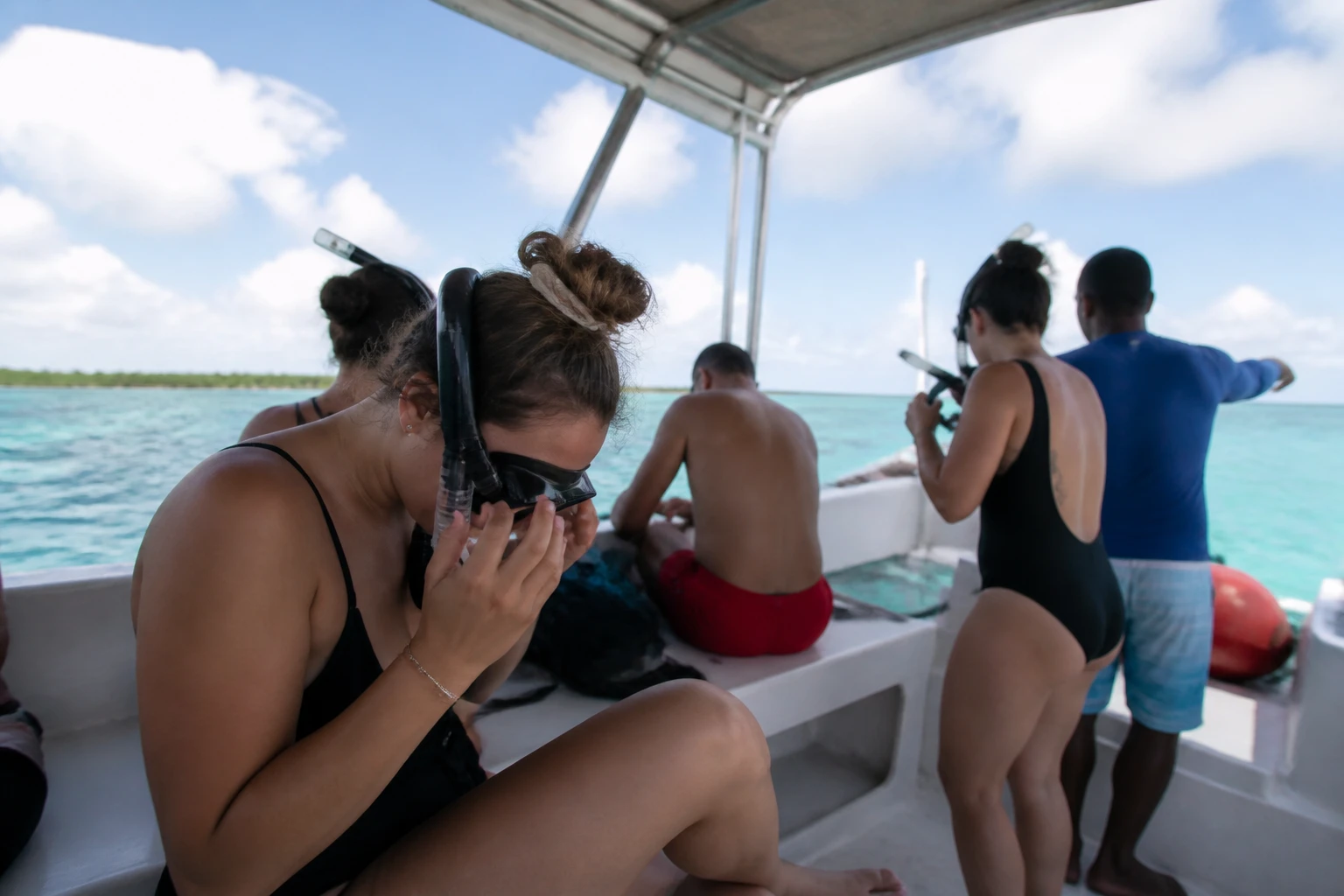
Pack lightly, but prepare for sun, spray, and time in the water. A compact bag is easier to manage aboard a small excursion boat than a bulky daypack. Confirm which equipment is supplied before bringing duplicate gear.
- Swimwear and a lightweight cover-up
- Sun protection appropriate for a marine outing
- Drinking water, unless the operator lists it as included
- A towel and dry clothing for the return
- Any necessary personal medication in protected packaging
- A waterproof pouch for small valuables
If you use your own mask, test its fit before the trip. Divers should confirm equipment needs directly with the dive provider rather than assuming every package supplies the same items. Travelers prone to motion discomfort should make their usual preparations before boarding and follow personal medical guidance.
Accessibility and comfort questions to ask
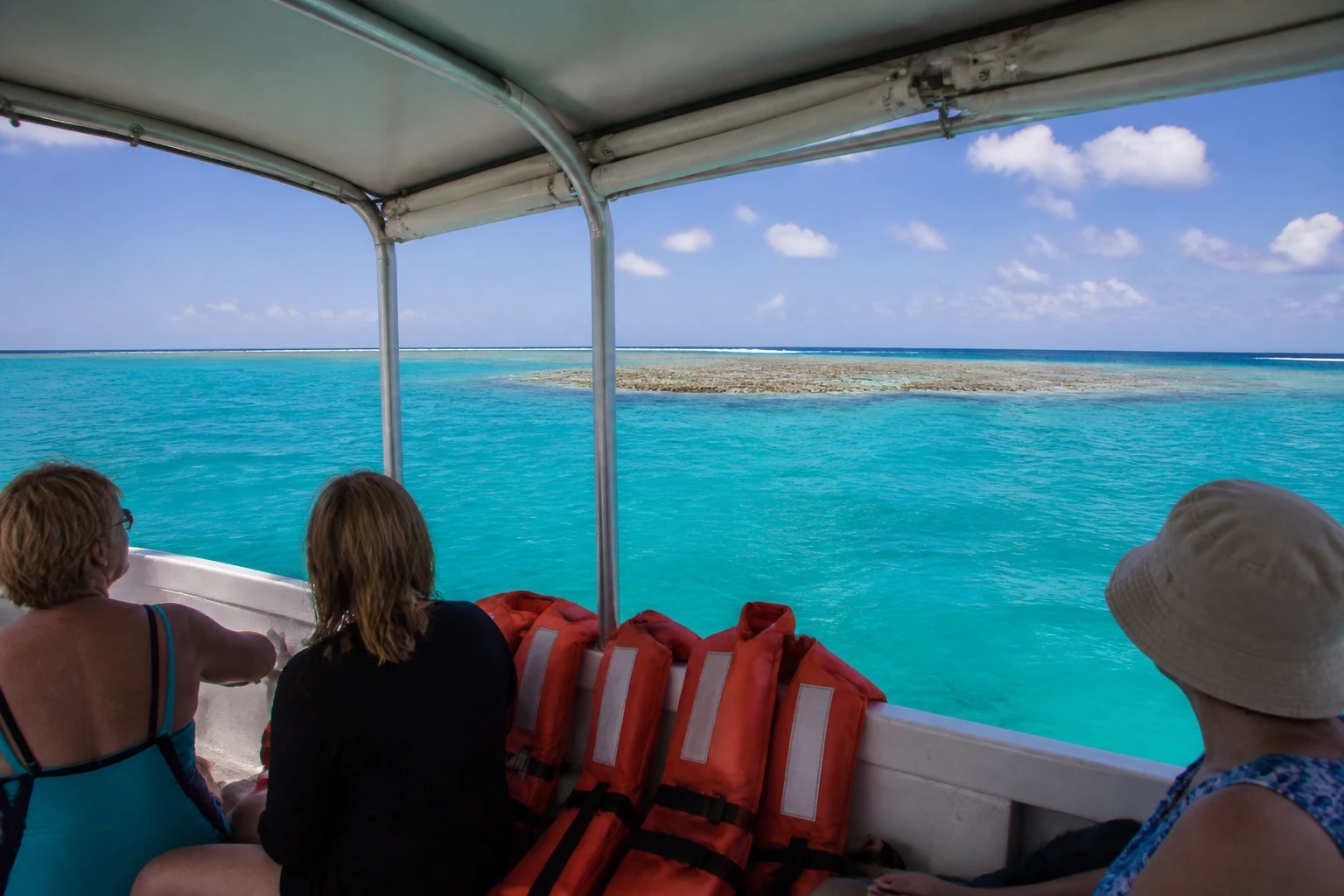
Accessibility depends heavily on the individual boat, dock, crew, and activity format. Do not assume step-free boarding, an accessible toilet, transfer assistance, or a particular type of flotation support. Ask specific questions that describe what the traveler needs rather than relying on a general “accessible” label.
- Ask whether boarding involves steps, a gap, or a transfer between dock and boat.
- Confirm the ladder style and whether crew can assist with water entry and exit.
- Ask about boat stability, seating, shade, and toilet availability.
- Confirm life-jacket sizing and any flotation support needed in the water.
- Check whether a non-swimmer or non-participant can remain safely aboard.
- Review cancellation terms if the sea state affects a traveler’s ability to participate.
These questions are also useful for older travelers, families, nervous swimmers, and anyone recovering from an injury. A clear discussion before booking allows the operator to explain the actual boat setup and prevents surprises at the dock.
Safety planning beyond the boat trip
Belize’s destination-wide travel advice calls for increased caution because of crime, including the possibility of isolated violent incidents in tourist areas. This is not a Hol Chan-specific closure or warning. Use ordinary travel precautions in transit, protect valuables, and avoid letting a day on the water distract from basic awareness on land.
Travel advice also notes that serious illness or injury can require evacuation. Suitable travel insurance is worth considering for a trip involving boats, snorkeling, or diving. Read the policy terms carefully because coverage for water activities, diving depth, medical evacuation, and weather disruption can differ.
On excursion day, follow the operator’s safety briefing and speak up before entering the water if you are uncomfortable with the conditions. A traveler who is tired, unwell, or uncertain about an entry method should not feel pressured to participate in every stop.
Is Hol Chan Marine Reserve worth visiting?
Hol Chan is a strong choice for travelers staying in San Pedro who want an organized encounter with Belize’s protected marine environment. Its appeal lies in the linked reef, seagrass, mangrove, lagoon, and coastal habitats protected across a large reserve, all reached through a practical boat outing from Ambergris Caye.
The main limitation is that conditions and reserve management shape the day. Mooring availability, time limits, and marine weather can influence the route and pace. Travelers who accept that structure are better positioned to appreciate the reserve as a living protected area rather than a guaranteed checklist of stops or wildlife.
Choose a suitable operator, compare the complete price, and check the marine forecast near departure. Then arrive ready to follow the crew’s instructions and adapt to conditions. That simple preparation keeps the focus where it belongs: on experiencing one of Ambergris Caye’s most significant protected seascapes responsibly.
Frequently asked questions
Where is Hol Chan Marine Reserve?
Hol Chan Marine Reserve is centered on Hol Chan Channel, a natural break in the barrier reef about four miles south of San Pedro on Ambergris Caye, Belize.
How do you get to Hol Chan Marine Reserve?
Visitors generally reach Hol Chan by boat from San Pedro. Arrange an organized excursion and check the confirmation for the meeting point and departure time.
How much does it cost to visit Hol Chan?
The total cost varies by operator, activity, date, and package. Confirm whether the quoted price includes reserve fees, equipment, taxes, and transportation; the published BZ$20 daily fee applies specifically to sport fishing and should not be treated as snorkeling or diving admission.
What is protected within Hol Chan Marine Reserve?
The reserve protects 102,400 acres, or 41,440 hectares, of linked coral reef, seagrass meadow, mangrove-swamp, lagoon, and coastal environments. Its boundaries include areas added through several expansions.
Can non-swimmers visit Hol Chan?
A non-swimmer can ask to remain aboard, but this arrangement must be confirmed with the specific operator. Also ask about boat seating, life jackets, flotation support, and whether entering the water is required by the selected package.
What happens if marine weather is poor?
The operator decides whether conditions permit departure, rescheduling, or cancellation under its policy. Check Belize’s marine forecast shortly before the trip and review the package’s weather terms before booking.
Can you fish inside Hol Chan Marine Reserve?
Fishing inside the reserve requires a valid license, including commercial, sport, and recreational fishing. Confirm current requirements with the fishing operator before booking any activity within reserve boundaries.
Is Hol Chan Marine Reserve accessible?
Accessibility varies by boat, dock, crew, and activity. Confirm boarding steps, transfer assistance, ladder requirements, life-jacket sizing, seating, toilet availability, and whether a non-participant can remain aboard.