
Where to Eat in Belize
Belize rewards travelers who eat with a little curiosity. A morning meat pie, a plate of rice and beans with chicken, a bowl of crab soup, or a sharply dressed ceviche can say as much about a place as a museum label. The most satisfying approach is to follow the country’s regional character: look to the Central Coast for familiar Belizean staples, the south for cohune cabbage, and the northern islands for seafood. Local eateries and food stands are especially worthwhile for Belizean cooking.
- Seek out local eateries and food stands for classic Belizean dishes.
- Order rice and beans with chicken, a meat pie, or cowfoot soup around Belize City and the Central Coast.
- Put seafood high on the list in San Pedro, Caye Caulker, and other northern island stops.
- Try cohune cabbage when traveling through southern Belize.
- Plan dinner close to where you are staying or arrange your return transport before dark.
- Check a specific venue’s menu, payment methods, service charges, and accessibility arrangements before you go.
Start with Belizean dishes that define the trip
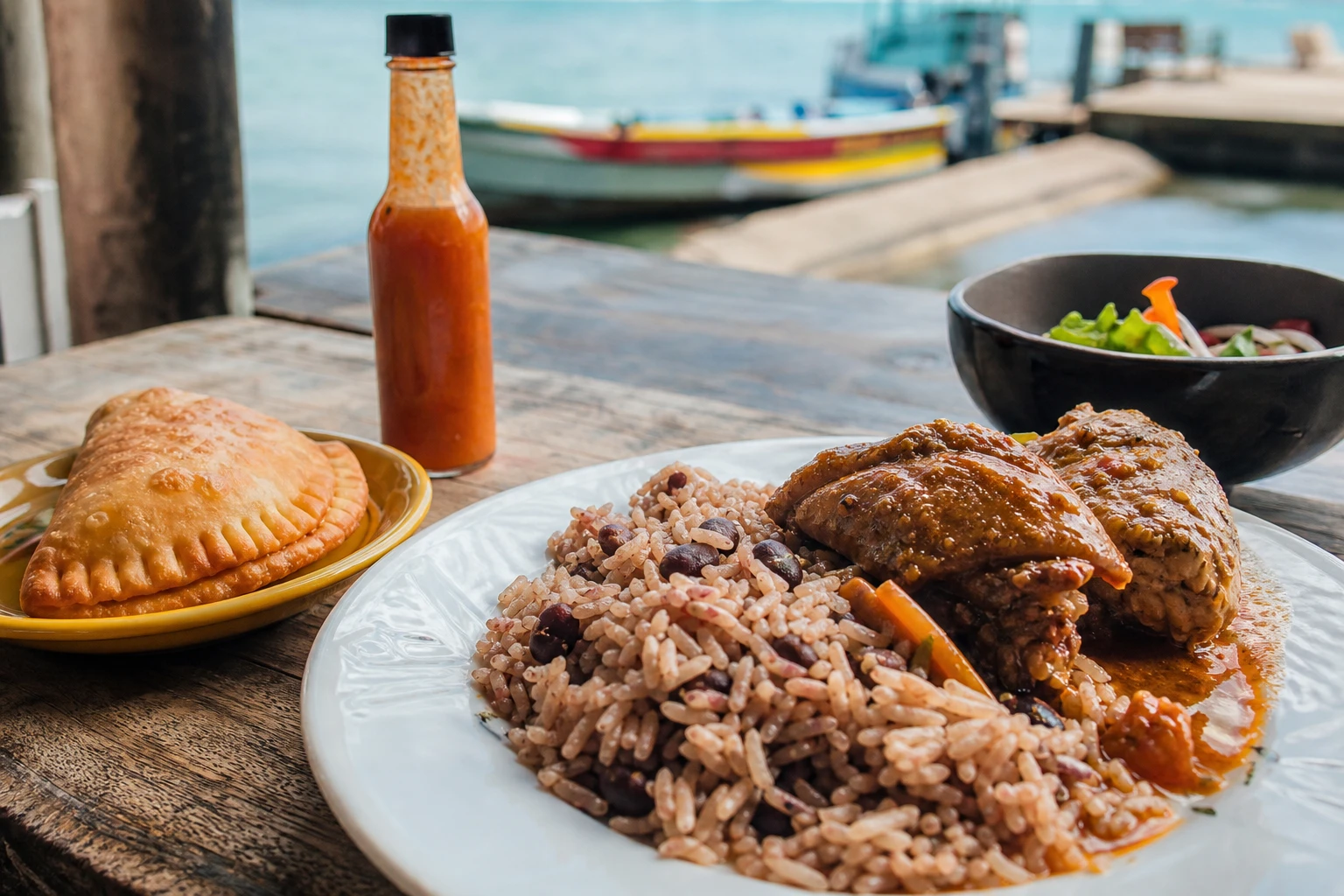
For a first meal in Belize, start simple and local. Rice and beans with stewed or fried chicken is a useful introduction, bringing together one of the country’s best-known everyday plates. Meat pies are another easy order for a snack or quick breakfast. They are small, savory, and well suited to a day that begins early for a boat, a road trip, or a cave outing. Keep Marie Sharp’s hot sauce nearby if you enjoy heat; it is a familiar Belizean culinary signal rather than an afterthought.
Do not confuse rice and beans with plain white rice served beside beans. In Belize, the combined dish is a recognizable staple, often paired with chicken. Let the kitchen’s seasoning lead before adding hot sauce. Belizean cooking carries many influences, so a food-focused itinerary works best as a series of regional meals rather than a hunt for one single national flavor.
Eat local around Belize City and the Central Coast
Belize City and the Central Coast are strong places to begin with everyday Belizean comfort food. Look for meat pies, rice and beans, stewed or fried chicken, and cowfoot soup at local eateries and food stands. These are the meals to choose when the goal is a direct taste of local cooking rather than a formal occasion. They also fit naturally around arrival-day sightseeing or a daytime stop before continuing elsewhere in the country.
Build the meal around one or two dishes instead of trying to order a greatest-hits list at once. A meat pie makes sense as a small bite. Rice and beans with chicken is substantial enough for lunch. Cowfoot soup is the order for travelers eager to explore a more traditional, hearty dish. Ask what is ready and popular that day, then follow the kitchen’s lead. This is often a better strategy than arriving with a rigid menu in mind.
Keep Belize City dining practical. Plan city-to-city travel and long transfers earlier in the day, then eat near your lodging or a known return ride in the evening. Avoid walking or driving at night, and do not treat a late-night cross-country drive as a casual dinner plan. The U.S. State Department also advises reconsidering travel to Southside Belize City because of crime. A well-timed lunch is often the easiest way to enjoy the city’s food scene.
Choose the northern islands for seafood
For seafood, focus your appetite on the northern islands. Travel Belize highlights conch, shrimp, squid, crab soup, and ceviche there, where seafood is at its freshest. San Pedro and Caye Caulker are natural places to plan a seafood meal after time on the water. Ceviche is an especially practical warm-weather choice, while crab soup offers a more filling option when you want something substantial.

Seafood is a reason to slow down, not a guarantee that every waterfront table will suit every budget or schedule. Compare current menus and ask about the day’s catch, preparation, taxes, service charges, currency, and payment method before settling in. A restaurant’s island location does not automatically answer questions about price, dietary needs, or access, but it does point you toward Belize’s strongest seafood-focused dining areas.
If San Pedro is on your itinerary, use an Ambergris Caye travel guide to coordinate meals with beach time, boat departures, and evenings near your accommodation. Travelers arriving by air or water can also benefit from a Belize Airport to San Pedro transportation guide, since transfer timing shapes the first meal of the trip. On an island day, lunch after a morning activity can be more relaxed than trying to fit a complicated dinner around the last ride back.
Still comparing Sightseeing?
Ask for tour ideas, hotel suggestions, or a simple trip plan that combines both.
Trip Helper
Treat lobster as a seasonal bonus
Lobster is one of Belize’s most celebrated coastal foods, but it should be treated as seasonal. Travel Belize describes lobster season as running from February through July, and notes Lobster Fests in June in coastal destinations including San Pedro, Caye Caulker, and Placencia. That makes late winter through early summer the clearest period to place lobster high on the wish list.
Late-July travelers should check directly with the restaurant or event organizer before planning a meal around lobster. The exact seasonal closing date and current festival schedules can vary. When lobster is available, enjoy it as the centerpiece of one meal rather than assuming it will anchor every seafood menu. Conch, shrimp, squid, crab soup, and ceviche give the islands plenty of other local directions to explore.
Find cohune cabbage in southern Belize
Southern Belize gives the dining itinerary another local specialty: cohune cabbage. It is a useful dish to seek out when your route includes the south, especially if you want a meal that feels tied to the landscape rather than a repeat of island seafood or Central Coast chicken plates. Ask local eateries about it when you arrive, since daily offerings and preparations are venue-specific.
This regional rhythm is the key to eating well across Belize. Give the Central Coast its classic plates, let the islands handle a seafood-focused meal, and save room in the south for cohune cabbage. The result is a more memorable food journey than ordering the same familiar dish at every stop. It also leaves space for whatever local specialty is cooking that day.
Plan dining around transport, timing, and access
Belize dining is often easiest when it follows the day’s transport plan. Eat lunch before a long transfer, book dinner near where you will sleep, and decide how you will get back before ordering another round. Avoid walking or driving at night, particularly between cities. If an evening meal is central to your plans, a known transfer or nearby lodging turns it into an enjoyable stop rather than a race against the clock.

Travelers who need accessible dining should contact each restaurant and transfer operator ahead of time. Belize’s accessibility and infrastructure do not match U.S. standards, and limitations can affect transport, lodging, communication, and general infrastructure. Ask specifically about step-free entry, restroom access, seating, parking or drop-off, and, for island routes, ferry or vehicle boarding. A tourist area should not be assumed to be fully accessible.
Do not rely on a fixed nationwide food budget. Current menu pricing, taxes, service charges, currency acceptance, and card payment policies are all best checked with the individual venue. Local eateries and food stands are the best route to classic Belizean cuisine, while an island seafood meal can be a more occasion-driven choice. Confirm those practical details once you have narrowed down where you want to eat.
A simple Belize food plan for a short trip
- Make your first daytime meal a local staple: rice and beans with chicken or a meat pie around the Central Coast.
- Choose one seafood-focused lunch or dinner on a northern island, with ceviche, conch, shrimp, squid, or crab soup in mind.
- Add Marie Sharp’s hot sauce to taste, after trying the dish as served.
- If your route goes south, ask for cohune cabbage at a local eatery.
- Keep intercity travel in daylight and place dinner near your overnight stop.
Belize is best for travelers who enjoy following appetite as well as itinerary. Start with a local plate in Belize City or along the Central Coast, reserve an island meal for seafood, and seek out cohune cabbage in the south. The main limitation is logistical: late dinners require a transport plan, especially outside your overnight base. Put regional dishes at the center of the trip, and each stop will bring a distinct flavor to the table.
Frequently asked questions
What food should I try first in Belize?
Start with rice and beans served with stewed or fried chicken, or pick up a local meat pie for a quick snack. These are signature Belizean choices, especially around Belize City and the Central Coast.
Where is the best place for seafood in Belize?
The northern islands are the best choice for seafood, with conch, shrimp, squid, crab soup, and ceviche highlighted as local options. Check the specific venue’s current menu, payment methods, and service charges before you go.
Is lobster available year-round in Belize?
No. Travel Belize describes lobster season as February through July, with Lobster Fests held in June in San Pedro, Caye Caulker, and Placencia. Confirm late-season availability and event dates directly with the restaurant or organizer.
What should I eat in southern Belize?
Ask for cohune cabbage, a regional specialty highlighted for southern Belize. Local eateries are a good place to inquire about daily preparations.
Is it safe to go out for dinner in Belize?
Plan dinner near your lodging or arrange a known return transfer, and avoid walking or driving at night. For Belize City, reconsider travel to Southside Belize City because of crime.
Are Belize restaurants accessible for wheelchair users or travelers with limited mobility?
Accessibility varies, and it should be confirmed directly with each restaurant and transfer operator. Ask about step-free entry, restrooms, seating, drop-off, and ferry or vehicle boarding before making plans.
