
Caye Caulker Travel Guide
Caye Caulker invites a slower style of island trip, but the journey still rewards careful planning. Water-taxi schedules, baggage policies, weather, entry rules, and transfer times can all shape the first and last day. This Caye Caulker travel guide focuses on those practical decisions, along with safety, accessibility, accommodation, insurance, and a flexible itinerary that leaves room for the Caribbean setting.
- Use the Belize City water-taxi connection as the standard starting point for planning island access.
- Confirm the live sailing time, departure dock, baggage policy, and weather updates with the operator.
- Avoid a tight water-taxi connection before a same-day international flight.
- Treat air service as an alternative only after checking current routes, fares, baggage limits, and transfer timing.
- Arrange suitable travel and medical-evacuation insurance for an island stay and boat activities.
- Confirm accessibility directly with each hotel, transport company, and tour operator before paying.
The most useful planning principle is simple: protect the edges of the trip. Leave breathing room on arrival day, keep the final night flexible when flight timing is tight, and avoid building an itinerary that depends on several separate transfers working perfectly. Once those pieces are secure, the middle of the stay can remain pleasantly unstructured.
Decide if Caye Caulker fits your Belize itinerary
Caye Caulker suits travelers who are comfortable organizing an island transfer and allowing weather-dependent plans to remain flexible. It can work as a focused island stay or as one part of a longer Belize trip. A Complete Guide to Belize for First Timers can help place the caye alongside inland destinations, international arrival logistics, and the rest of the country.
The main limitation is that an island schedule has less tolerance for rushed connections. Boat departures can change, and a late arrival on the mainland can affect the onward journey. Travelers who prefer firm, tightly packed schedules should build a larger buffer than they would for a destination reached entirely by road.
If you are comparing Belizean island stays, an Ambergris Caye Travel Guide offers another planning framework. Compare the transport arrangements, accommodation choices, activities, and overall trip structure that matter to you. Avoid choosing solely from photographs. The arrival and departure plan can have just as much influence on a short stay as the room or excursion list.
How to reach Caye Caulker by water taxi
Water taxis are a principal connection between mainland Belize and the cayes, and the Belize City connection is the standard route to use when planning travel to Caye Caulker. Before departure, confirm which operator you are using, the correct dock, check-in expectations, the current timetable, and baggage rules. These details are operational and can change.
Do not use an old schedule or fare sheet to build a current trip. Historical material has listed the Belize City to Caye Caulker crossing at roughly 45 minutes, but it does not establish today’s sailing time or departure schedule. Use the operator’s current information for planning, then allow extra time for check-in, loading, and the transfer to the dock.
- Identify the current water-taxi operator and departure dock.
- Check the live timetable for your actual travel date.
- Review check-in instructions and baggage restrictions.
- Allow time to travel from your arrival point to the dock.
- Recheck weather and service updates before setting out.
- Keep the operator’s confirmation available during the journey.
Weather-related changes deserve special attention on departure day. If an international flight depends on a morning boat and a separate mainland transfer, a modest delay can consume the entire buffer. Consider returning to the mainland earlier when the cost of missing the flight would outweigh the benefit of one more island night.
When air service could be an alternative
Air service should be treated as a possible alternative rather than an assumed connection. Check current airline availability before comparing it with the water taxi. Route schedules, fares, baggage limits, airport transfers, and connection windows all affect whether flying is genuinely more convenient for your travel date.

The best choice depends on the whole journey rather than the time spent aboard. Compare how long it takes to reach the departure point, how luggage is handled, and how much margin remains before the next connection. Travelers carrying specialized equipment or larger bags should pay particular attention to operator limits before booking.
| Planning factor | Water taxi | Air alternative |
|---|---|---|
| Availability | Core mainland-to-caye transport mode | Confirm service for the travel date |
| Schedule | Check the live operator timetable | Check the current airline schedule |
| Baggage | Review operator rules | Review airline limits before booking |
| Weather | Allow for service changes | Check operating conditions and connection effects |
| Tight connections | Build a generous buffer | Evaluate airport transfers and check-in time |
| Limited mobility | Confirm boarding arrangements | Confirm aircraft and transfer accessibility |
Still comparing Airport Transfers?
Ask for tour ideas, hotel suggestions, or a simple trip plan that combines both.
Trip Helper
Build an arrival day that can absorb delays
Keep arrival day light. The essential goal is to complete the mainland transfer, check in for the correct water taxi, reach the island, and settle into the accommodation without racing a dinner reservation or scheduled activity. A flexible first evening turns a transport delay into an inconvenience rather than a ruined booking.
If your international arrival is late in the day, examine the live water-taxi timetable before committing to an island hotel for that night. Do not assume a departure will be available after baggage collection and the trip to the dock. A mainland overnight can be a practical buffer when the connection does not line up comfortably.
Use the same logic in reverse. The last island night deserves as much attention as the first. Check your boat, ground transfer, airline check-in deadline, and a sensible delay allowance as one continuous chain. Separate reservations can look workable individually while leaving little protection when combined.
Choose accommodation around your trip priorities
Choose a room by matching it to the trip you actually plan to take. Ask about the route from the arrival dock, luggage assistance, check-in arrangements, power or water contingencies, air conditioning if important, and how early departures are handled. Travelers booking boat activities should also consider how they will reach the meeting point with their gear.
A short stay benefits from simple logistics. A longer visit gives more freedom to select a property for space, atmosphere, or extra amenities. The guide to Where to Stay in Belize for First Timers can help you compare an island stay with accommodations elsewhere in the country before fixing the order of your route.
Read the cancellation and change terms before paying, especially if the booking depends on a same-day boat connection. Check whether the property expects advance notice of arrival time and how it handles a delayed check-in. Keep the hotel’s contact details and your reservation information accessible offline during the transfer.
Plan activities without overloading the calendar
A useful Caye Caulker itinerary combines protected transport days with one or more open activity days. Consider placing the excursion you care about most in the middle of the stay rather than immediately after arrival or just before departure. This leaves room to adjust if weather or transport disrupts the original plan.

When comparing Belize Tours, check the actual meeting point, departure time, duration, minimum participation rules, equipment, food, cancellation policy, and what happens if conditions change. The tour title alone rarely tells you enough to judge how well an activity fits between hotel check-in, boat transfers, and other reservations.
Avoid placing multiple prepaid boat activities on consecutive days unless the schedule is intentionally activity-heavy. An uncommitted day gives you room to rest, rearrange plans, or enjoy the island without watching the clock. It also reduces the temptation to join an outing when conditions or your energy level are not right.
Use a flexible three-day planning template
For a short visit, treat the first day as the arrival and orientation day. Complete the transfer, check in, locate the next day’s meeting point if you booked an activity, and confirm any pickup or departure instructions. Keep the evening flexible rather than tying it to a reservation that cannot tolerate delay.
Use the second day for the main planned experience, with enough room before and after it to avoid rushing. Review the operator’s equipment list, physical requirements, and weather policy in advance. If the day involves a boat, carry only what you can protect from spray and keep essential medication securely packed.
Keep the third day open or use it for departure, depending on the length of the trip. If leaving Belize on an international flight, calculate the full sequence back to the airport and add a meaningful buffer. Travelers with a high-stakes or early flight should consider positioning closer to their departure point in advance.
Budget for the full transfer, not only the ticket
Current water-taxi fares should be checked directly for the travel date. A 2023 approved-fares document is too old to use as a dependable 2026 price, particularly when building a family or group budget. Include the fare, transport to and from the docks, baggage charges if applicable, meals during the journey, and a contingency allowance.
Apply the same full-cost approach when comparing air travel. A fare can look attractive until baggage restrictions and transfers are added. Conversely, a higher headline cost can still suit a traveler if it creates a safer connection window or reduces a difficult transfer. Compare complete door-to-door plans rather than isolated ticket prices.
- Mainland transport to the departure point
- Water-taxi or air ticket
- Possible baggage fees
- Transport between arrival point and accommodation
- Travel and medical-evacuation insurance
- Weather or delay contingency funds
Prepare for safety and medical limitations
Belize requires normal travel awareness plus attention to current national advisories. The U.S. advisory updated June 18, 2026 lists Belize at Level 2, Exercise Increased Caution, because of crime. It notes that violent incidents can occur in tourist areas and identifies the south side of Belize City as the country’s historical concentration of violent crime. That is a Belize-wide planning caution, not a Caye Caulker-specific risk rating.
Use established transport arrangements, watch belongings during transfers, avoid displaying valuables, and keep your phone charged. Pay special attention while passing through unfamiliar mainland areas or handling luggage at busy transfer points. Review the latest advisory near departure because security conditions and official guidance can change.
Emergency medical services in Belize can be delayed or unavailable, so suitable insurance deserves a place near the top of the checklist. Choose coverage appropriate for island travel and any planned boat activities. Review medical-evacuation benefits, exclusions, and assistance procedures before leaving home rather than waiting until an incident occurs.
Save emergency contacts, insurance assistance details, accommodation information, and transport confirmations where they remain available without mobile data.
Ask specific accessibility questions before booking
Do not assume that docks, boats, local transport, hotels, or tours provide step-free access. Disability infrastructure in Belize is below U.S. standards, with reported limitations in public transportation, accommodations, communication, information, and general infrastructure. Accessibility needs should be confirmed separately with each provider involved in the trip.
Ask practical questions that match your needs. Describe the mobility device, its dimensions and weight, and whether you can manage steps or transfer without a lift. Request details about boarding surfaces, handrails, assistance with luggage, bathroom access, room entrances, shower design, backup power, and the route between the dock and accommodation.
Travelers with limited mobility should compare the entire water and air journey rather than assuming one option is easier. Aircraft access, dock conditions, boat boarding, baggage handling, and ground transfers can create different barriers. Obtain property- and operator-specific confirmation before paying, and retain those details with the reservation.
Check entry rules before leaving home
Entry requirements are separate from the island transfer and should be checked through official Belize immigration guidance. Current U.S. travel information states that visitors need proof of onward or return travel and sufficient funds. Carry the documents needed to demonstrate your departure plan and review the rules again shortly before travel.
Travelers planning more than 30 days need extra attention. Current U.S. guidance states that stays beyond 30 days require a monthly US$100 extension fee at an immigration office, for up to six months. Because immigration requirements can change and depend on nationality, confirm the rules that apply to your passport and intended length of stay.
Keep onward bookings, accommodation details, insurance information, and copies of essential documents together. Store a secure digital copy separately from the originals. This simple preparation also makes it easier to answer questions during check-in or reorganize plans if weather affects the island transfer.
Pack for boats, sun, and schedule changes
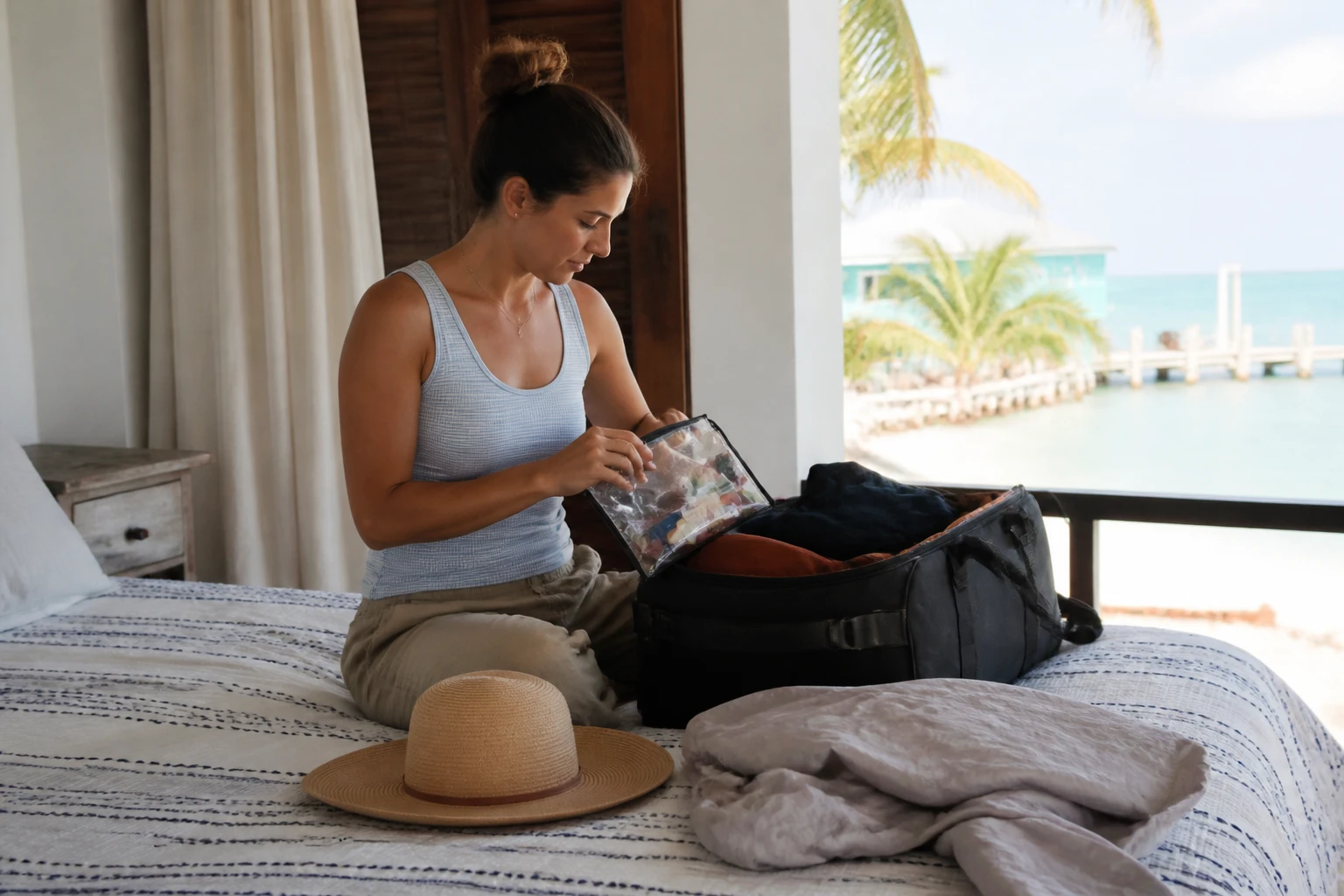
Pack light enough to manage your luggage through a boat transfer. Use a water-resistant pouch for travel documents, electronics, and medication. Bring sun protection, a refillable bottle, comfortable footwear, a compact rain layer, and any personal medical supplies that would be difficult to replace quickly during an island stay.
Place one change of clothing and essential toiletries where they are easy to reach. Keep medication in your hand luggage rather than a bag that will be loaded separately. If traveling with snorkeling, photography, fishing, or mobility equipment, check transport and tour baggage rules before deciding what to bring.
- Water-resistant document and electronics pouch
- Sun protection and refillable water bottle
- Compact rain layer
- Essential medication and basic personal supplies
- Comfortable footwear suitable for transfers
- Offline copies of reservations and emergency contacts
Make the final day deliberately conservative
A good final-day plan protects the international departure first. Confirm the live water-taxi schedule, dock, baggage instructions, ground transfer, and airline check-in deadline. Then add time for ordinary friction, including loading, traffic, queues, and weather-related changes. Do not rely on the minimum possible connection time.
Caye Caulker is best suited to travelers who can give the journey some breathing room. Its principal mainland connection is straightforward to understand, but the live details still need checking. Secure the transfers, insurance, accommodation, and important activities first. Leave the rest of the itinerary loose enough to respond to conditions without turning every change into a crisis.
The next practical step is to compare your arrival time with the current boat or air options, then work backward from the international departure. Once those margins look comfortable, choose a room and place the most important activity in the middle of the stay. That order keeps the trip focused on the island rather than on catching the next connection.
Frequently asked questions
How do you get to Caye Caulker from mainland Belize?
Water taxis are a principal mainland-to-caye transport mode, and the Belize City connection is the standard route for planning travel to Caye Caulker. Confirm the current operator, departure dock, timetable, baggage rules, and weather updates before traveling.
How long is the water taxi from Belize City to Caye Caulker?
Historical 2023 material listed the crossing at roughly 45 minutes, but it should not be treated as a current journey time or schedule. Check the operating company’s live information for your travel date and allow additional time for check-in and loading.
Can you fly to Caye Caulker?
Air service can be considered as an alternative, but current availability must be checked directly with airlines. Compare schedules, fares, baggage limits, airport transfers, and connection windows before deciding between air and water travel.
Should I travel from Caye Caulker on the same day as an international flight?
A same-day connection requires a generous buffer and careful checking of the live water-taxi schedule. Weather and operational changes can affect boat service, so travelers with an early or high-stakes flight should consider returning to the mainland earlier.
Is Caye Caulker accessible for travelers with limited mobility?
Accessibility must be confirmed with every hotel, transport provider, and tour operator involved. Belize has reported limitations in public transportation, accommodation, information, and general disability infrastructure, so do not assume step-free access.
Is Caye Caulker safe to visit?
Travelers should follow current Belize-wide safety guidance and use normal precautions, but national advisories do not provide a separate Caye Caulker risk rating. The U.S. advisory updated June 18, 2026 lists Belize at Level 2 because of crime and specifically highlights the south side of Belize City as the historical concentration of violent crime.
Do I need travel insurance for Caye Caulker?
Suitable travel and medical-evacuation insurance is strongly advisable for an island stay, especially when boat activities are planned. Emergency medical services in Belize can be delayed or unavailable, so review coverage, exclusions, and assistance procedures before departure.
How many days should I plan for Caye Caulker?
Plan enough time for a flexible arrival, at least one open activity day, and a protected departure connection. A three-day framework can work as a planning template, but adding extra time gives more room for weather changes and an unhurried island schedule.